
For generations, the path to adulthood was straightforward: go to college, get a job, build a life. But many young men are beginning to question the college component of that path; tuition keeps rising, A.I. has made the professional landscape more uncertain, and there’s just a sense that after four years at college, guys graduate feeling like they haven’t been very challenged, haven’t much changed, and haven’t gained a lot of real confidence, competence, and concrete know-how.
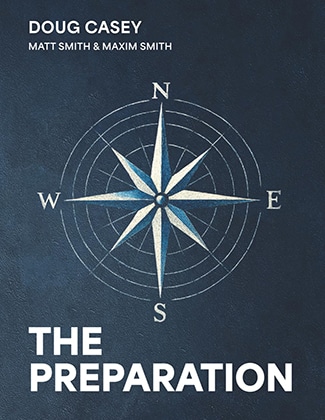
My guest today, Matt Smith, has created an alternative to college — a 4-year, 16-cycle curriculum designed to shape participants into Renaissance Men: skilled, self-reliant, and grounded in character. Matt co-authored The Preparation with his son Maxim, who is currently working his way through the program.
In the first half of our conversation, Matt shares what kickstarted this idea and what’s lacking in the education model for young men today. We then turn to the nuts and bolts of The Preparation, and Matt walks us through several of the program’s hands-on cycles — including earning EMT certification, building a house, and training as a fighter in Thailand — and how gaining these real-world skills prepares a young man for whatever is next in life.
Resources Related to the Podcast
- AoM Podcast with Luke Burgis on mimetic desire
- AoM Podcast #810: How to Turn a Boy Into a Man
- Leon Battista Alberti
- AoM Podcast #1,025: The Life and Legacy of Louis L’Amour
- Education of a Wandering Man by Louis L’Amour
- AoM Article: The Pros and Cons of a 4-Year College
- AoM Article: 11 Alternatives to a Traditional 4-Year College
Connect With Matt and Maxim Smith
Listen to the Podcast! (And don’t forget to leave us a review!)



Listen to the episode on a separate page.
Subscribe to the podcast in the media player of your choice.
Transcript
Brett McKay:
Brett McKay here and welcome to another edition of the Art of Manliness podcast. For generations, the path to adulthood was straightforward. Go to college, get a job, build a life. But many young men are beginning to question the college component of that path. Tuition keeps rising. AI has made the professional landscape more uncertain, and there’s just a sense that after four years at college, guys graduate, feeling like they haven’t been very challenged, haven’t much changed, and haven’t gained a lot of real confidence. Confidence and concrete know-how. My guest today, Matt Smith, has created an alternative to college, a four year, 16 cycle curriculum designed to shape participants into Renaissance men, skilled, self-reliant and grounded in character. Matt co-authored The Preparation with his son Maxim, who is currently working his way through the program. In the first half of our conversation, Matt shares what kickstarted this idea and what’s lacking the education model for young men today. We then turn to the nuts and bolts of The Preparation and Matt walks us through several of the program’s hands-on cycles, including earning EMT certification, building a house, and training as a fighter in Thailand, and how gaining these real world skills prepares young man for whatever is next in life. After the show’s over, check out our show notes at AoM.is/ThePreparation.
All right, Matt Smith, welcome to the show. Thank you very much. Real pleasure to be here. So co-authored a book with your son Maxim and then also Doug Casey. It’s called The Preparation in which you lay out a curriculum as an alternative to college for young men, and it’s kind of an alternative to college as a rite of passage for young men, what was the impetus behind the development of The Preparation?
Matt Smith:
Well, my other co-author, Doug Casey, he actually has been trying to get me to write this book for 12 years with him, but he called it Renaissance Man, is what he called it. He’s been trying over various times to get me to do it with him. It never made sense because he’s written a number of books and he always said, they’re total brain damage to write. You don’t make any money doing him. And then he is trying to sell me at the same time to write this book with him. But when my son turned 17, or my son was in his 17th year, so he’s almost turning 18, and I could see in him this consternation, this anxiety about the future, and I’m a college dropout and I’ve been an entrepreneur my whole life. So he didn’t grow up in an environment where I was propagandizing him one way or the other.
You should go to college or you should not go to college. But he, I guess always assumed that he wouldn’t because I didn’t. And I think that I even made the path feel more uncertain to him than normal, but I think all 17 year olds probably feel this way. So I could see this anxiety in him and I had a lot of worry. And also, this is all in the COVID era too, so you’re thinking about what would make sense. And then I thought back about the book that Doug had talked to me about many years before and over and over again about writing with him. And I said, maybe we can make something like that work. I didn’t really think about writing a book at that stage. I was really just thinking of seeing if we can turn this into a program that he could follow to help your son. That was the only motivation. There’s no way I would’ve done it without that. Yeah.
Brett McKay:
And you talk about in the book that college these days, there was a time when college was a great way to segue into adult life. You learned knowledge that you could apply to a career that would last your entire life. Why do you think that model doesn’t work anymore for so many young men? Well,
Matt Smith:
There’s a whole bunch of reasons, but I mean, you could argue on one side of it, economy is changing dramatically. So with AI and automation, we’ve already started to see a lot of job cuts around that. We’ve seen people that have specialized in the fields. They were told to go into computer science, come out and not be able to find a job when they get out of school. There’s like two weeks ago in the New York Times, there was a long article about this. Somebody had applied to 5,000 jobs, had 13 interviews I think, and no offers, computer science. So there’s a question of what that future looks like without the problems of college. So one thing is the future AI and the future that might cause, and the other thing is just it’s extremely expensive and it’s no longer rare. Now 53% of people graduate high school go to college.
So you’re not among the, of course you can go to more elite schools and then the track is different of course, but people are graduating with this huge debt around this burden that they’re carrying around with them. And totally, if they find out that job that they’d specialized in, they really, they feel it’s totally soul crushing. They now no longer have options because they have to service that debt from college. They pay their rent, and so they’re kind of trapped and they find themselves, I think totally different than when even 20 years ago when costs were so much lower than now
Brett McKay:
Going back to that idea of how AI is changing the career landscape. I had this conversation with my son a couple months ago. He’s 14, he’ll be 15 next month, and we were on a walk and he said something pretty incisive for a 14-year-old. I was surprised he caught onto this. He said, dad, I think what worked for you and mom and even my grandparents as far as transitioning adulthood like college. He says, I don’t think that’s going to work for me. And I said, I think you’re right. It’s a completely different world. And he said, what do I do then? What should I major in? Where should my career be? And I said, but I don’t really know, to be honest.
Matt Smith:
That’s amazing. A 14-year-old is asking these questions
Brett McKay:
And I think a lot of young people have that anxiety like your son did. What am I supposed to do? Because it used to be you could pick out your career, even if you worked in a factory, let’s say 60 years ago, you knew you’d have a job for six years because nothing really changed all that much. Or you went to college and you decided to become an accountant or an attorney, not much change. You knew what the game would look like for your career. That’s no longer the case. And I can see that just causing so much stress and anxiety for young people.
Matt Smith:
Yeah, I think so. Even if we were wrong when we went to college, like I said, I’m a dropout, but I did go for 18 months anyway, even if we were wrong, but we believed that accounting job would be available for us even if we were wrong, it still gave us something to pursue some clarity. Today it’s clear to everybody that the future is going to be vastly different. So knowing that just increases people’s uncertainty so dramatically. And yeah, it’s a tough position for these kids. They’ve been through the ringer with all the COVID stuff and then it’s uncertain future. It’s a really tough time to be a teenager.
Brett McKay:
This book is geared towards young men. We’ll talk about the curriculum and The Preparation. I think a young woman could do it and it’d be awesome for them, but it’s geared more towards young men. But you talk about one of the things that young men, they have this anxiety, they don’t know what to do. And so what they typically do is they just default to drifting and looking at what their peers are doing, whether in person or online. And you talk about the role mimetic desire plays in this drift. So we’ve had Luke Burgess on the podcast before who’s written about mimetic desire. But for those who aren’t familiar with it, can you briefly describe it and then how does this mimetic desire contribute to dissatisfaction in a young man’s life?
Matt Smith:
Happy to. I mean, Luke does a great job. I think the book’s called Wanting, I think of the name of it, but it’s based upon Renee Gerard’s work, which essentially he says that humans are unusual animals and that basically our drives are shaped by those around us. And this doesn’t just apply to young men or young women, it applies to you and I we’re subject to, we can be subject to things if we’re not aware of them. And this is why you see things become really popular, whether it be a fashion trend or something, how they just take off you as like, why do humans follow these trends like that? It’s kind of programmed into us. And so we look to others for what they appear to want, and then it becomes our own want. It feels legitimate. It feels like we really truly desire that thing too, because we’re taking the cues from the people around us. But it’s not genuine, it’s not really authentic. And I really believe, again, this is not a young person problem. This is a every person problem. You have to be aware of it, the effect of others on you and what they desire. I mean, it’s like keeping up with the Jones’ idea. That’s that concept in a nutshell.
Brett McKay:
And I think for a lot of young men, they don’t really have good models anymore. So mimetic desire can be a positive force if your model is noble and good and positive, but a lot of young men don’t have that.
Matt Smith:
Well, I would say if anything, the great role models that might even exist even in literature are taken out of the classroom for young men especially. So I think they’re gone and there’s been an attack on masculinity in the culture, and that’s certainly made it worse. And then the counter reaction to that, the bros is also negative. It’s just not really the right thing either. It’s not real masculinity. So there aren’t heroic figures for them to look up to except I guess superheroes, which is nonsense. So yeah, I think it is a real struggle for young people to have good models and to then know where to go and what to do.
Brett McKay:
So what you do, let’s talk about The Preparation. So the goal of The Preparation is, the original idea was to help young men turn into Renaissance. Men who are competent, confident, and dangerous, basically turn ’em into the most interesting man in the world from those Dos Equis commercials. Tell us more about this renaissance man model that you’re trying to follow. So basically the Renaissance man ideal is the model that you’re hoping young men will use their mimetic desire to become like. So tell us about that. What is this renaissance man model that you’re trying to create with The Preparation?
Matt Smith:
So fundamentally, instead of the focus being on what kind of job do you want to have? The question that confronts young men at this stage in life, it’s like what kind of job you want to have or the three main choices, of course, college, military, or a trade school, nothing really wrong necessarily with any of them, but all of them are simply designed to get you a job that gets you economic viability so that you can be hopefully reasonably prosperous and have some economic security. But none of them address the most important question, which is what kind of man do you want to become? And what we try and do is get them to think about that early in the book and we focus on this, the idea of the Renaissance man, essentially as a person who’s able to, who not only knows a lot about broad range of topics, from music to art, to building a house and milking a cow, anything you can imagine, just a broad range of knowledge, but also knows how to shape the world around him, knows how to put it into action, knows how to create with it.
And that’s the difference between a polymath and a real renaissance man is a polymath, knows a lot, but a renaissance man uses that knowledge to create, to shape the world around them. Yeah,
Brett McKay:
I think we have this kind of a distorted idea of what a renaissance man is. When we think of like, oh, he’s a Renaissance man. It’s like, well, he just knows a lot. Basically we’re describing a polymath, the actual Renaissance man from the Renaissance era, as you said, they not only knew a lot of stuff, but they could do a lot of stuff and they were actively engaged in trying to shape the public sphere. So use this example of Leon Batista Alberti, who was this guy,
Matt Smith:
He was a badass, obviously a guy. He lived in the 15th century in Italy, and he is one of the central figures really of that renaissance period. He was a painter and architect, a photographer, a philosopher, mathematician, and he was also quite an athlete. He was a great horseman apparently too, and a mountaineer. I mean, he was quite accomplished in every walk of life. And he thought that the only thing that limited what you could do was your will, this renaissance area. What it did is it combined these classical virtues that were sort of rediscovered in the Renaissance from ancient Greece and Rome, and with this new life that was sort of fed into the period once actually the Renaissance period fundamentally was about revitalization by a rediscovery of these ancient virtues where a man could shape themselves and ought to shape themselves. So that that’s what life’s about, is that pursuit of shaping yourself into something great. And so he’s kind of the iconic figure of that period really, who really proved it true.
Brett McKay:
Yeah. Going back, one of their goals was they wanted not only shape themselves, but they wanted to shape themselves so they could shape the world, have an impact on the world, and I think all humans crave that. We crave that desire to mold our outside environment. Nietzsche said, joy is the feeling of power increasing and for Nietzsche power was like creativity. It’s like, yeah, you had an impact. I think all humans have that desire, but I think particularly in young men, young men really want to feel like their actions have an impact on the world around them. I think that’s one of the reasons why video games are so seductive. It gives you the feeling that you’re doing something but you’re really not. So I really love this idea of the renaissance model of someone who acquires knowledge and skills to act in the world.
Matt Smith:
And these are, I think with young men, what they really want is they want to be somebody. So they have this angst to do something meaningful. They know that by doing something meaningful, they’ll become something meaningful, but there’s so little that they can do. They’re so restrained. It’s like so little freedom on kids. I say they’re the most surveilled group of people that have ever existed on the face of the earth. Everything’s scheduled and organized for them and almost infantalized because of it.
Brett McKay:
Any other fictional or historical characters besides Alberti that you think are examples of this Renaissance man who not only knows a lot but can do a lot and have an impact on the world?
Matt Smith:
You can look at a lot of the founding fathers, frankly, like Ben Franklin. That man knew a lot and did a lot. It’s actually quite impressive of his accomplishments. You go through the founding fathers and you’ll find at least half a dozen that I think would qualify as Renaissance man amongst them. I’ll say for my son what was particularly motivating for whatever reason, and you never know why certain characters connect with you or don’t, but he really loved Edmund Dantes from the Count of Monte Cristo. I really made him watch one of the versions of the movie with me when he was younger, and I said, you’ll like it, trust me. He never really liked movies, but it or not. And he loved it. He loved that idea. And then he read the book and then he read the Under bridge book and he’s now read it a couple times. And this idea of this guy’s like a good virtuous guy, but really innocent and got basically everything that mattered to him, completely taken away from him all of a sudden and was at the total bottom of a, well, essentially in prison and really couldn’t get any lower, but built himself up and to become quite a remarkable man who absolutely did have the ability to shape the world around him.
Brett McKay:
Another one, as I was reading the curriculum for The Preparation, which we’re going to talk about here in a bit, another person that reminded me of this sort of renaissance man ideal that’s more modern. Louis L’Amour, the Western author, a hundred percent. You like him? Oh, I love Louie L’Amour.
Matt Smith:
Oh, oh, good. That’s good. That’s a good sign. Yeah, no, he’s great.
Brett McKay:
Yeah, we’ve had his son on the podcast to talk about his work, but also his book Education of a Wandering Man, which is basically an education of a renaissance man.
Matt Smith:
Yeah, my son has read that book three times. It’s a really good book going through this process. It’s been, he said, it’s been interesting going back and my son has been the beta tester for this program for the book. What ended up being the book, he’s been doing it in real life for the last two years. And so as he goes through different stages of it, he’s read it at different points and he’s like, I see different things at each stage. So it is quite an inspiration for him as well. And Lou, the More absolutely was a renaissance man,
Brett McKay:
And I would even say a lot of actors from the golden age of Hollywood, I’m talking Steve McQueen, even writers like Jack London, Ralph Ellison, if you look at their lives, they didn’t follow. They didn’t, a lot of ’em didn’t go to college or if they did go to college, they dropped out and they just did weird stuff. Like Steve McQueen, he was in the Marines and then he labored on a chain gang in the deep south because he got arrested for vagrancy. He was a lumberjack. He joined the circus, I think Ralph Ellison before he became a rider, he tried to become a professional trumpet player in New York City and he was living in A-Y-M-C-A trying to be a trumpet player. And that’s where he met Langston Hughes and he got kind of brought into that circle of the Harlem Renaissance there in New York City. Sean Connery, I mean he served in the Royal Navy. He was a milk man, he was a lifeguard. He was like a bodybuilder for a little while. And what stands out to all of these guys? They were just doing stuff. They’re just trying different stuff, increasing their surface area of luck and just these opportunities came up where they found something they really were good at and passionate about and the rest was history.
Matt Smith:
They did it their own way too. I think they were able to, in all those cases, I think they were able to devote their time and energy to the things that drew them in more because they had this broad exposure to many things and broad exposure to lots of different people and different things. It just increases their total decision set. So like their optionality in life increases dramatically. The more like the way I guess you put it surface area they touch, but I have to include people they touch within that as well because you build this weird networks that connect you with weird people. If you do unusual things
Brett McKay:
And if you just go to college like, well, you go to college and you might learn some interesting things, but your experiences aren’t going to be as varied as these guys.
Matt Smith:
And today you can learn anything. You can learn in college without going to college. That’s the thing. It’s available to us now in a way that it was not before. There is some advantage if you happen to have a great professor who can take whatever the subject matter you’re studying and they can bring it to life in a way that you would not catch without them. There are those rare instances, but most of it is not like that, at least in my experience.
Brett McKay:
So before you talk about the specific skills a young man should develop and that your son Maxim is developing with The Preparation, you spend a lot of time in the beginning of the book talking about developing a personal code. Why start with that?
Matt Smith:
I think it’s because it’s the only thing that matters in the end. And so you got to start at the end, I guess, Doug, when he originally pitched me on the book 12 years ago, he was very vague about it. He says, I want to write a book about becoming a Renaissance man. And I said, tell me more. And he said, well, the three most important verbs in the English or didn’t really any language are be and do. And and I didn’t get it. It took me a long time to really understand what he meant by that. But essentially, if you think about it have is what everyone is oriented to generally. It’s certainly a part of this mimetic desire that people have. They look around, they see what other people want, they want to have things, they want to have a beautiful wife or they want to have a new car or they want to have a travel experience.
They basically are oriented almost only toward have. And in our consumer culture, this has been amplified, like the dial’s been turned up to 11. It’s really intense and it’s almost hard to avoid it if you don’t understand this framework. So the problem with focusing on have is that have is a byproduct. You don’t get it directly, you get it indirectly. By doing so, do is the operative, do is what matters. What you do will determine what you have. But the only thing that actually matters is be and be is who you are. What is your substance? What is the thing that differentiates you from the other 10,000 people standing in line? What is the difference? And this is the thing that this essence, a bee is the thing that I find is very motivating to young men. Actually, it’s motivating to men of any age because the bee, the substance, the thing that makes you solid.
And so we had to focus on that. So what is the, the way we think of it is that with this personal code, we ask them to go through this exercise, it seems kind of trivial. I understand at first it can seem trivial. The first part of it, is a set of rules for yourself that you don’t expect anyone else to follow, but they’re just rules for your own conduct. And that requires a little self-reflection. And it’s like when you do things that make you feel small or that make you feel a little ashamed. One example, if a friend invites me out to dinner on Friday, I could say, I’m busy little white lie. Or I could say, I don’t really feel like it this Friday. Maybe we could do it another time. The path of least resistance is simply to just actually say, oh, I’m busy, I just can’t do it.
But every time, personally, when I would do something like that, it made me feel small, made me feel not good. And it’s not real deception, like a really bad lie, but it’s still not good. It didn’t make me feel good. And so we asked them to look at those things that they do that make them feel small and write ’em down and just decide not to do those things anymore. Just set up these rules for yourself. It might sound again trivial, but this is the formation of self-esteem. This is the formation of the self itself because this is how you are separating yourself from going with the flow, from just doing what everyone else is doing because you’re deciding, no, I’m not going to do these things. It’s only a negative thing first. I’m not going to do these things under these conditions. And that’s where it starts though.
It’s like you develop this beachhead where a young person, anybody can build from a real self from that, just a little bit of self-control around I’m not going to do the things that make me feel small. That’s the first part. The second part is things to aspire to, and this goes back to the virtues. So we introduce ’em to the same virtues that inspired the Renaissance from Greece and Rome and we just basically share a list with them and say, which ones do these speak to? You pick five or whatever, six that feel good to you. That’d be awesome. Courage. That’s cool. Yeah, I would like to be somebody who’s known as courageous or maybe it’s that you’ve got what they call the gravitas, which is actually just dignity. I mean virtue, the core of the word is vir, which means man. So the pursuit of virtues is the pursuit of being a man in general.
So anyway, we tell ’em to identify those virtues that they voluntarily decide to aspire to. And unlike the rules which are binary, it’s like, oh, I messed that up. I failed. Or I did the right thing by my own standards. Virtue is something you never get there. It’s always just something you’re trying harder to get. You can always be more courageous, you could always be more disciplined if that’s a virtue you choose, you could always be more steadfast. So it’s something you pursue constantly and this is inspiring to people to be because what kind of man do you want to be? What kind of man do you want to be known as? So that’s the second part. The third part is where we tell them to start to list their stack of accomplishments, which will grow as they get into the book because we actually later on tell them exactly what they should do.
Brett McKay:
So it sounds like it’s all about helping these young men develop a sense of self.
Matt Smith:
It is the most important thing. Be is the thing, and this is what when you see people who are even gainfully employed, having gone to college feeling quite lost, why? Because they still don’t know who they are. They still don’t know what differentiates them specifically. Is it what makes them? So the beginning of that starts with this. I think it’s totally core to, I mean, I would much rather spend time. I like people who have done a lot of stuff. They’re very interesting and I like people who have a lot of stuff. I have a lot of stuff. Stuff is nice. But if the person is not a good person, I mean if they don’t have virtue, if they aren’t pursuing virtue, they’re not people I want to be around. And certainly I don’t want to be someone like that. So it’s a constant barometer for me as well.
And I just think it’s never discussed with young men, they never hear it, they never even hear this. So I think it had to be there first because most of the book is about what to do, but doing for what reason? Because some of these things are hard and when you’re doing them, you don’t like Louis Morris running around doing a lot of weird stuff. Everybody’s doing these weird things, they look weird. And so to everyone around them it might’ve looked like they’re failing. So in that you have to be able to come back to something like a higher purpose than that. And that is the being that is what kind of man do you want to become.
Brett McKay:
Alright, so let’s get into the brass tacks of the curriculum of The Preparation. I think what everyone’s probably like, okay, what’s in this thing? What is my young son going to be doing? So you break the curriculum into cycles. How long do the cycles last and what are the components of a cycle? Alright,
Matt Smith:
So again, we’re competing with college is the way we think about it. And so we imagine four years, my son is through two of them now each year is broken up into four quarters. Obviously we call each quarter a cycle. So there’s 16 cycles and each cycle basically has a few key components. The most important one we call the anchor course, that’s the main event. Sometimes there’ll be a couple weeks long, sometimes they can be a couple months long of that tire cycle, three month cycle. But that’s the main thing. And everything else is built around that because these are hard to schedule so you have to plan everything around it. So you plant the big rock, you put the big rocks in first in the jar, that kind of idea. It starts with that. And then related to it, Doug especially is a strong advocate for academics.
He thinks they’re super important. So every cycle has academic courses as a component to it. As much as possible we try and make it so that they’re related to the subject matter, that they’re anchor course that they’re actually going through at the time as much as possible. So there’s the academic portion, there’s a set of activities that we encourage people to do and they could choose the things that are interesting to them. But we encourage diversity by trying a lot of different things and they could be from learning a musical instrument and it’s a good thing for sure. Definitely learning to play chess is a good thing for sure. But scuba diving and skydiving and well, we have a whole list, a whole bunch of ’em in there of different activities and there’s some time that’s set aside each week for those kinds of things. And other than that, there’s a reading list of course too.
So we have books that we recommend and then it’s reflection. So in total we actually, unlike college, which you can be considered a full-time student if you’re taking 12 credit hours now supposedly there’s a lot more outside of that than that. But I came from the army as I had to pay for my college, I had to go to join the National Guard. So I came from the army to college and I couldn’t believe how much free time everybody had. It was so shocking to me. The difference between high school and college, it’s a huge difference. You’re so much free time. This basically assumes you’re putting 40 productive hours in every week. Now these could be some of these hours. Are you at the gym that counts lifting weights, that’s good for you, that’s one of your activities. But there are required things in there too that we have. But we’re assuming 40 hours a week, which definitely prepares somebody that in and of itself more for the real world frankly, than a heavy course load would.
Brett McKay:
Okay, so each cycle has an anchor course and this is the more intensive hands-on component of a cycle. Then there’s some related academics that you’re going to do and then there’s some activities you can choose from. And then you’re supposed to do a written reflection at the end of a cycle. And as you said, you’re pitching this as an alternative college. And as we talked about earlier, college is just really expensive these days. I think doing four years at an in-state university is something like a hundred thousand dollars in total and then it just goes up from there. So the academics with The Preparation, that’s like online courses you can take for free, but stuff like the anchor courses cost money. So how much does The Preparation cost to do altogether?
Matt Smith:
Yeah, so if you did the exact 16 ones that we have, and there are two that are really expensive in here, the total cost of that over four years is about $70,000. About $70,000 basically. That’s one year to prestigious college in the US today, but it’s a lot of money. 70,000 even that I understand. But the difference, the thing is, is that you can work your way through it. And I have some evidence I’ll share with you. There are two, I don’t know if you want me to get into the anchor courses now, but there are two that are really expensive. You don’t have to do those and saves a lot of money. One of ’em is becoming a private pilot. You don’t have to do that one, but it is, my son went through it, it’s very interesting. It’s a good skill for him to have. And the other one is learning to operate heavy machinery, but you get certified in it. And that could be, you could always fall back on that and do that for work. That pays pretty well. But those two things are pretty expensive courses.
Brett McKay:
Yeah. Okay. Well let’s talk about some of these specific cycles. This is a lot of fun. The first one that you talk about, I think this is the first one your son did is the medic. Let’s talk about the medic. What’s the anchor course of this cycle and then why did you even pick this? You set this out for your son. So
Matt Smith:
Basically the anchor course is just getting your EMT certification. So if you ever unfortunately are in an ambulance, you’ll be there with probably one paramedic in one EMT. EMT is like the base level, the reason that he started with it. And I think the reason why a lot of people should start with it or why we placed it. The first one is simply because it’s the most accessible. It requires wherever you are, wherever you live, somewhere around you, there is an EMT school not too far away that you can attend. And it’s very low cost. I mean some of ’em $1,200 sometimes maybe up to $2,000, depends upon exactly where you are in the country. But basically what it does, it qualifies you to work on it like an ambulance obviously. And that pays basically minimum wage, just not a great job, but it does give you some economic viability.
I mean it does qualify you for a job that you couldn’t have if you didn’t have it. But it also is an amazingly useful skill that actually can be parlayed into quite a bit more as Maxim did. Specifically Maxim because of his part of this is that weekly reflection and accountability we talked about earlier as part of it. So he published, he started publishing a substack just basically at first he was simply listing what he’d done that week. It was like a way to hold himself accountable, just they had to put it out there and no one reading it didn’t matter over time. There’s a few thousand people that have read it now, they’re just subscribed to it. So it’s a little harder for him, but I mean it’s a little harder in that he knows that there’s an audience. But through that someone reached out to him and said, Hey, you’ve got this working on an ambulances and a fund, you don’t want to do that.
I don’t know. It was wildfire fighting business basically where the contracts with the western states during the summers when they have these terrible fires and as an EMT. So he spent one of his cycles, a work cycle. He spent one summer last summer fighting fires in Oregon making $600 a day, no expenses, which for me when I was 18, I know money isn’t worth what it was was worth, but I think that was roughly my take home pay for a month in the army was $600. So through things like that, unique opportunities show up for you and there’s different ways to leverage it, but for him ultimately if there is a emergency trauma type situation, he’s qualified and skilled to be able to be the person who can step up and do something about it, to know how to handle the situation, to assess what’s going on and to take action. And that skill gives you walk into the world differently. You encounter the world differently when you know that if something like that happens, you will know what to do.
Brett McKay:
Yeah, it’s a big confidence booster. I think it’s really powerful. And after I read that section like man, I’m going to have my son, he needs to get EMT certified, I want to get MT certified after reading about it. And so along with the EMT certification, there’s an academic component and as you said, you try to keep the academics related to the anchor course. What kind of academic stuff was your son doing?
Matt Smith:
I mean this one, it’s like anatomy, biology and there’s some practical chemistry in there too actually, which is kind of fun. But yeah, it’s as much as possible related to it. And then there’s part of it that is just like in college there’s required and then there’s room for electives. We have this whole, in the back of the book, there’s basically they could choose, they could fill in electives with things that they’re just curious about. So there’s plenty of options beyond for the elective section, but in the required it’s anatomy, biology and practical chemistry.
Brett McKay:
Another cycle that really piqued my interest, I was like, I wish I could have done this. The builder walk us through the builder cycle.
Matt Smith:
There’s this awesome place in Maine called the Shelter Institute where over three weeks, if you do the three week version, there’s a two week version and a three week version. The three week version you design and build a home and you don’t build it to completion, but you actually just, you put up the timber frame structure in the third week, but the first two weeks are really the most important ones. They really, you go through the entire process of exactly understanding how do you handle plumbing and electrical and how do I choose the site and how do I begin to even start with this? So you learn to design a home. Now you don’t necessarily want to be a home builder, but you can’t understand the benefit of this. And they’re mostly the people that go to this are adults by the way. They’re not children that go, there are people like you and I are like, Hey, this would be cool to know.
But when you have this skill, you see the world differently. You encounter it differently. And also it could expose you to creative outlets that might draw you in deeper. But the whole point of all of this, and there are lots of the 16 we picked, we could have picked another 16 that I think would’ve been just as valuable. But the key thing is that they all build upon one another. Helping being, helping this person have a list of accomplishments that impresses them that is impressive to others and that makes them see the world from what they could do instead of what they can’t do because things are a mystery to them. They don’t understand how anything works. So I order food on Uber Eats, that’s how I eat. Milk comes from a carton, I don’t know. You want to expose them as much as possible to as many of these things as you can. And so their framework and understanding of how the world works and how they can effectively create and it becomes clear to them.
Brett McKay:
After I read about the builder and I learned about this school you could go to, I was like, I’m doing a two week vacation where I’m going to go to this thing. I think a lot of guys have that dream of I’m going to buy some property somewhere and I’m going to build myself a little a-frame cabin. I couldn’t do that. I had no clue what it would look awful and I wouldn’t even know where to start. So I’d love to have that skill. I also think it’s just a useful skill knowing how to build a house just as a homeowner.
So many times where I’ve had something broken into my house and he needs a repair and I bring a contractor and he’s explaining it to me and I’m like, is this guy ripping? Is this actually a problem? Maybe this isn’t a problem. And he’s just saying it is. But I don’t know
Matt Smith:
Exactly. This is the problem with specialization in a way. It’s allowed us to become a prosperous society like this specialization. It’s been good in that way, but on an individual basis, what it does to us is bad. It has a real negative effect where our basic understanding of how basic things around us function are totally outside of our awareness or understanding. And if you think back maybe our parents’ age and if not absolutely their parents’ age, they knew all of this stuff. I mean not necessarily all of these different things, but they basically understood the world around them way better than people do today.
Brett McKay:
The academic component, I imagine it’s a lot of architecture. Yeah, history. There’s some literature in there. That one too. Yeah. Yeah. Another one that intrigued me, the cowboy, again, I think this reminded me of Louis L’Amour. That’s why I liked it. What’s the cowboy cycle?
Matt Smith:
Maybe it’s because I’m such a Louis Lamore fan too. There’s a lot of benefits. Well, there’s two parts to it actually. For this one, basically there’s this place called this cowboy academy you go to and they teach you all the basics of working with horses and on a ranch. And it’s a pretty short course. I believe it’s five days. That’s a pretty short one. And then there’s a longer one where you actually go on or you do horse and mule packing in Idaho. But learning to deal with these animals and to feel comfortable around them is really important. I think it teaches, it’s humbling in some ways. I mean if for an adult, even if you haven’t been around horses, that could absolutely destroy you if they wanted to and learn how to work them well and work cooperatively with them. And plus it’s so much fun and I think it taps into some of these things will absolutely tap into this wanderlust side of the hero’s journey, the rite of passage.
These things that I really think are totally missing from our culture today that we have to, if you’re a really involved parent, you try and construct these things if you can for them, but they’re limited in that they don’t get to experience it on their own fully. And through these cycles, they do some things that don’t make sense. There’s no rational reason to do it. There’s no obvious benefit you’re going to get out of it. It’s just a journey. And this is definitely one of those I think that comes out of that. I mean, handling a horse teaches patients and discipline, even leadership, believe it or not, it’s weird. I don’t know if you spend a lot of time around horses, but they’re beautiful, amazing. In that time we spent a lot of time focusing on the academics and the academic portion of this cycle. It’s a lot of US history, western history, western literature to give ’em cultural context, including of course the Sackett series.
We encourage them to start reading and get into that because I think virtues are present in the characters of the Old West and certainly in all of Louis L’Amour’s books. But also learning about Kit Carson, I mean his life, just things he accomplished in his life. So you read this biography of him as well during that cycle. And I think these do give these models for when you look at what’s possible, if you’re like a 17, 18 and 20-year-old, hell, if you’re even 50 years old, and you look at these examples of these people who totally break the Overton window of possibility of what you can do with your life, it helps motivate you, inspire you. And so there’s a lot of focus on that in this cycle. A lot of wanderlust in this cycle.
Brett McKay:
So another cycle, the fighter cycle. I think your son’s about to start this one, is that correct? Or is he doing it?
Matt Smith:
January he starts that. Yeah, he’s in the entrepreneurship cycle right now.
Brett McKay:
Okay. So tell us about the fighter cycle.
Matt Smith:
Alright, so fighter cycle, basically you go to Thailand and there’s several different schools, but we recommend one in particular. It’s got two locations where you basically enroll in Moy camp and it’s pretty intense. It’s pretty intense, but most of it’s just basic physical training, basic sparring. Of course, at the end of it, the hope to actually do a real bite. And it’s not required of course, but it’s the hope that they would do that I think is good. And that one fundamentally the truth is that we encourage the study of martial arts anyway. So the question is whether or not you make a cycle out of it because a lot of the activities we talk about could have honestly many of them could be turned into cycles that are worth it. So my son was doing BJJ, that’s Brazilian jiu jitsu, almost wherever he was.
There’s almost always a place he could go to do that. So we encourage it anyway, but we decided to make it part of his cycle because that hero’s journey arc — get away going somewhere totally different. Where the world functions in a totally different way, where everything is exotic to you gives you a better sense of the entire, I mean most Americans don’t really see how the rest of the world functions, so we want them to get out and see the world a bit. And this gives them a way to do that in an environment where they’re not just traveling for the sake of traveling, but they’re traveling with the sense of purpose and learning and where they’re going to walk away a different person, they will come out of that not being the same person
Brett McKay:
In the academic portion are you doing Asian Studies?
Matt Smith:
Yeah, pretty much. I mean a lot of, let’s say martial history, part of it too, philosophy of combat. We have the Book of Five Rings for instance, is one of the things they read during that. But yeah, it’s mostly oriented toward while they’re there to learn about the history of the brand.
Brett McKay:
I mean if you did just the cycles we’ve talked about, so the the cowboy, the builder and the fighter, if a young man did just that, he would be head and shoulders above his peers. One of the most interesting young men out there, he would have, as my son would say, aura. He’d have infinite aura if he did these things. And these are just four of the possible cycles. I mean there’s other ones like we’ve talked about. So your son’s doing an entrepreneurial one right now. He basically has to start a business in three months and make money.
Matt Smith:
Well, he doesn’t have to make money. He could fail. I mean I’m not an entrepreneur, I’ve started many businesses and some have succeeded, some have failed. But the things you learn along that process is quite good. And the cycle starts off very hands-on, very specific and structured. And then it gets more into the abstract things like entrepreneurship, investing, the things that I think are very important but don’t give you a sense of self in the same way that these hands-on hardcore recognized skills do. And the four we’ve gone through, basically imagine just if someone just took a gap year before college just did those four in the gap year, different person, they would be going into college. If they still chose to go that route, they’d go there knowing a sense of self and a sense of where they want to take their life.
Brett McKay:
Yeah, I mean so other ones you talk about, and we won’t talk about ’em in detail, but there’s like survivalist cycle where you go to a primitive living intensive school for two weeks. You mentioned the pilot cycle where you get your pilot’s license. There’s a sailor cycle where you’re going to learn how to, you’re going to go to South America and learn how to sail, which would be awesome.
Matt Smith:
My son did that basically around the Falin Islands and then through the Strait of Magellan. And he learned how he’s a certified crewman on a sailboat. And so that’s also an economically viable job actually.
Brett McKay:
For sure. Yeah, the welder cycle, that’s another economically viable job. And it comes in handy. I’ve got a friend who started a farm after selling his business and he had to learn how to weld. He had to go to trade school, learn how to weld. There’s a lot of welding you do as a farmer, surprisingly, the heavy equipment operator obviously. And I mean I think that your big takeaway, all these things you’re going to learn, these skills you’re going to develop that contributes to the do of character and then that leads to the being of character. So it just gives you this sense of self that you’ll carry with you for the rest of your life. But what’s after The Preparation, after your son finishes all these things, what do you going to happen? What do you think he’s going to do with himself? So he’s got this awesome resume. He’s a renaissance man. I think you can make the case that with this diversity of real experience, I can give you the confidence and the capacity to pursue a variety of paths more so than college. But I can imagine that there are people out there listening, dads who are listening that are thinking, okay, well now what
Matt Smith:
I think that’s again the wrong question. I mean I get the question, but when have we known for sure where anything we did was going to take us in reality? Maybe we had a general direction to move toward, but we never really knew exactly what is the question basically cancels out because of the uncertainty of it, it can cancel out the desire to strive to become because it seems impractical because you want to know the practical answer. The truth is I can’t imagine what he’s going to be doing after two more years. I really can’t. I mean the changes I as a father saw where he started with this kid who had a lot of anxiety, he was basically super like I’m an introvert. I trained my kids maybe to be introverts. I don’t know. My daughter’s not so much, but my son certainly reflects that he did.
He’s completely gotten over that. He would never feel comfortable going and interacting with a lot of people, but it’s no issue for him whatsoever. He’s totally got that under control. I dunno if he manages it or if it’s dissolved away. But he’s gone from being basically a boy into being already after two years, every qualification I would say of being a man except for the fact he’s not yet a father. Shouldn’t be a father yet. I want to be a father yet. But I mean that’s the last step where I would differentiate between a boy and a man and after two years he’s already there. The world is full of opportunity for him already. He says no to things, opportunities all the time. So I can’t imagine, I can really can’t imagine what he’ll be doing.
Brett McKay:
Yeah, I mentioned earlier, I think doing all this stuff increases your surface area of opportunities and I think your son’s a testament to that. I mean, he got that job offer to work wildfires, and I’m sure he’ll have other opportunities that pop up just exposing himself to different people in different situations.
Matt Smith:
And lemme explain one more thing I forgot to say earlier about how expensive this is, and I said he could finance your way through it. Now I saved for him. A lot of people might be thinking again, it’s not economically possible for me so I can’t do it. I grew up very poor. My son did not. Okay. But I saved an irresponsibly low amount of money in his Vanguard account. Not enough for that one year at a prestigious university, that’s for sure. And he started with that two years ago and he’s never asked me for money. Today he’s got a little bit more money than he did when he started after two years. So you can work your way through it. And that’s what he’s done along the way. I just don’t want people to be scared off by that because, and the fact that he can work his way through doing this, he is at a level of economic survivability already. It’s like somehow he’s making it work. Of course he’s sleeping with extra bedrooms of family or friends when he is in different places. He is really thrifty with his money. But it works. It works. It does produce somebody who is independent and not just financially independent, but independent and they make sound decisions.
Brett McKay:
I mentioned earlier as I was reading through this book, I was thinking, man, I want to do some of this stuff. Do you know any middle-aged men who are doing some of these cycles for themselves?
Matt Smith:
Well, the book just came out two and a half weeks ago. So the formal structure of these has not been out there. But I could definitely tell you a lot of these anchor courses are not done by kids. I mean, they’re done by adults. I mean on this sailing thing that Max did through the straight of Magellan, he was by far the youngest person there by far. Yeah, I would say it’s the same thing with the Shelter Institute. I mean, that is not young people that are doing that. So certainly these are all things that draw in people like our age to do and older. And most of the readers of the book so far, their parents, their parents like you and I who want to help make sure their kids are pointed in the right direction and they have the same response that you did, which is like, this is stuff I want to do.
And I have to tell you, to be honest, writing the book was a challenge to do and to construct it so that it tells people exactly what to do. It took a lot out of me to do it, but I mean, I was just looking for things that sounded like that I wanted to do. Also, things that I knew would inspire my son and other boys around the world. And it tends, I guess it’s true of men my age and older. I mean, we had a 71-year-old write to us the other day. He said, I’m starting, I’m going to start doing this. So, well, I don’t have any examples yet of them doing it, but I have a lot of, if you read the reviews on Amazon, you’ll see a lot of parents saying echoing the same thing they want to do.
Brett McKay:
Well, Matt, this has been a great conversation. Where can people go to learn more about the book and your work?
Matt Smith:
Well go to Amazon to buy the book and currently there’s an audio version coming out, but this is a very physical thing. So even the audio book comes with a PDF that you’ll need or do it because kind of like a workbook in many ways. And there’s a hardcover edition, which if you’re trying to persuade a teen that maybe is unlikely to, sounds like your boy would read a book. He said, this is good for you. And luckily my son is at that stage too. But if you have one who might be a little more reluctant or something like that, the hardcover is designed to be as beautiful as possible within Amazon’s limitations. So it’s full color. And when they hold it in their hands, just open the book a little bit. They’ll know that they’ve not held a book like that before, that there’s something different about it right away.
And I think that it’s designed to be lure for the young man to pay attention a little bit differently to it. So the hard cover is $99. It’s way more expensive than the paperback is just 29. But if you’re looking for good lure, I would definitely get the hard back that’s on Amazon. And then you can go to The Preparation.com, which is a substack that we set up about the book. But also as people go through it, young people start doing, we encourage them to again, put this reflection and accountability to publish it like my son did, and then kind of amplify and connect the people who are doing it. So that, and I have to talk about my son’s substack too, just so you see. It’s maxim smith.com, M-A-X-I-M smith.com because you can see the stuff that he’s done for the last two years. This kind of a proof of work.
Brett McKay:
This is awesome. Well, Matt Smith, thanks so much for your time. It’s been a pleasure.
Matt Smith:
Oh yeah. Thank you very much, Brett.
Brett McKay:
My guest today was Matt Smith. He’s the co-author of the book, The Preparation. It’s available on amazon.com. You can find more information about The [email protected]. Also, check out our show notes at aom.is/ThePreparation where you can find links to resources. We can delve deeper into this topic. Well, that wraps up another edition of the AoM Podcast. Make sure to check out our website at artofmanliness.com where you find our podcast archives. And make sure to sign up for a new newsletters called Dying Breed. You can sign up at dyingbreed.net. It’s a great way to support the show directly. As always, thank you for the continued support. Until next time, this is Brett McKay, reminding you to not only listen to the podcast, but put what you’ve heard into action.