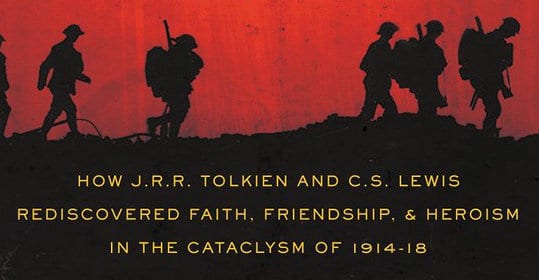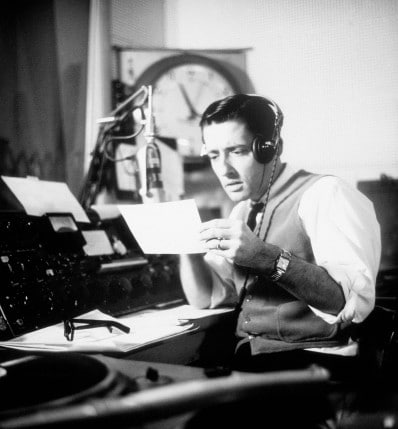

When people think of J.R.R. Tolkien and C.S. Lewis, they often picture tweedy Oxford professors and beloved fantasy authors. But their writing wasn’t drawn only from their bucolic days teaching at Oxford and walking in the English countryside; it had a darker, deeper backdrop: the trenches of World War I and the cataclysm of World War II. Lewis and Tolkien weren’t just fantasy writers — they were war veterans, cultural critics, and men with firsthand knowledge of evil, heroism, and sacrifice.
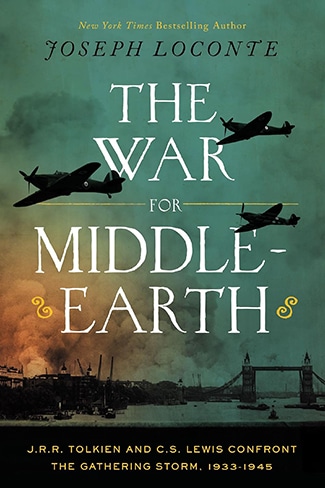
In today’s episode, I’m joined by Joseph Loconte, returning to the show to discuss his latest book, The War for Middle Earth. We explore how both world wars shaped the perspectives of Tolkien and Lewis, found their way into works like The Lord of the Rings and The Chronicles of Narnia, and infused their literary masterpieces with moral weight, spiritual depth, and timeless themes of resistance, friendship, and redemption. We also talk about the legendary friendship between Tolkien and Lewis, the creation of the Inklings, and how the men demonstrated the countercultural power of imaginative storytelling.
Resources Related to the Podcast
- Related AoM podcasts:
- #178: The Inklings Mastermind Group
- #272: Lewis, Tolkien, and the Myth of Progress (Loconte’s first appearance on the AoM podcast)
- #430: Why You Need to Join the Great Conversation About the Great Books
- #499: A Fascinating Primer on Norse Mythology
- #594: How Churchill (and London) Survived the Blitz of 1940
- #723: Men Without Chests
- #765: C.S. Lewis on Building Men With Chests
- #951: The Hobbit Virtues
- Related AoM articles
- Related outside articles:
- Tolkien books mentioned:
- Lewis books mentioned:
- Related books by other authors:
- Tolkien and the Great War by John Garth
- The Somme by Martin Gilbert
- The Guns of August by Barbara Tuchman
- The Future of an Illusion by Sigmund Freud
- The Aeneid by Virgil
- Phantastes by George MacDonald
- The Vinland Sagas
- The Iliad and The Odyssey by Homer
- The Divine Comedy by Dante Alighieri
- Le Morte d’Arthur by Thomas Malory
Connect With Joseph Loconte
Listen to the Podcast! (And don’t forget to leave us a review!)




Listen to the episode on a separate page.
Subscribe to the podcast in the media player of your choice.
Transcript
Brett McKay:
Brett McKay here and welcome to another edition of the Art of Manliness podcast. When people think of JR Tolkien and CS Lewis, they often picture tweedy Oxford professors and beloved fantasy authors. But their writing wasn’t drawn only from the bucolic days teaching at Oxford and walking in the English countryside, it had a darker, deeper backdrop: the trenches of World War I and the cataclysm of World War II. Lewis and Tolkien weren’t just fantasy writers, they were war veterans, cultural critics, and men with firsthand knowledge of evil, heroism and sacrifice.
In today’s episode, I’m joined by Joseph Loconte, returning to the show to discuss his latest book, The War for Middle-earth. We explore how both world wars shaped perspectives of Tolkien and Lewis found their way into works like The Lord in the Rings and The Chronicles of Narnia, and infuse their literary masterpieces with moral weight, spiritual depth, timeless themes of resistance, friendship, and redemption. We also talk about the legendary friendship between Tolkien and Lewis, the creation of the inklings and how the men demonstrated the countercultural power of imaginative storytelling. After the show’s over, check out our show notes at aom.is/warformiddleearth.
All right, Joseph Loconte, welcome back to the show.
Joseph Loconte:
Brett, it’s great to be with you. Thanks so much for having me.
Brett McKay:
So you got a new book out called The War for Middle-earth, and this is where you explore how both World War I and World War II shaped the writing of JRR Tolkien and CS Lewis. Why did you decide to do a deep dive into how these wars affected these guys?
Joseph Loconte:
Yeah, I think particularly the Second World War, as I began reading more and researching more, it became obvious, Brett, that the real action is the Second World War. Both men were affected profoundly by World War I — impossible not to be affected if you fought it, if both those men did and they survived. It was a traumatic experience for both, and I think it helped to shape their imaginations. But the Second World War is where the action is because now they are living through a cataclysmic event. It’s an existential crisis for Great Britain from 1939 to about 1945 really. And that’s when they’re writing their most important works, the works that we associate with these men. The Lord of the Rings, The Screw Tape Letters, The Great Divorce, and then the idea for The Chronicles of Narnia. All that is going on in those nightmare years between 1939 and 1945.
Brett McKay:
Alright, so to understand these works, you have to understand World War II.
Joseph Loconte:
That’s exactly right. And you have to understand, I think Brett is also from the British perspective, not the American perspective, because as my British friends like to remind me, we showed up late to that war.
Brett McKay:
And I mean, they saw it firsthand during the Blitz as getting bombed day in and day out. It was brutal.
Joseph Loconte:
Think about it, Brett. Let’s just take the London Blitz for a second. 76 consecutive nights save one of aerial bombardment on the city of London, and within a few days it’s millions, literally millions of people, women and children mostly evacuated from London into the countryside. And this is the way that CS Lewis gets the idea for The Chronicles of Narnia. Think about how it starts about children sent away because of the air raids into an old house with an old professor out in the countryside. He writes in the opening lines to The Chronicles of Narnia in 1939. So the war becomes a spark for their imagination.
Brett McKay:
Well, you mentioned World War I had a big impact on them and their experience in World War I carried over to their experience of World War II. Both of these men fought in World War I. What were the respective experiences like?
Joseph Loconte:
Yeah, both of them served as a second lieutenant in the British expeditionary force. They served in France. Tolkien was sent to the SOM in 1916 and the opening day, the Battle of July 1st, 1916, is still the single bloodiest day in British military history. Nearly 20,000 soldiers killed on the opening day. Tolkien will arrive a few days later, but the battle of the P song will rage on for months. And he lost most of his closest friends in that war, as did CS Lewis who arrives on the western front in France on his 19th birthday, happy Birthday, CS Lewis. And here you are with bullets flying a mortar shell will go off close to Lewis. It obliterates his sergeant and fragments of it strike him in the chest, the hand he thinks he’s going to die. And so it’s a profoundly difficult grief stricken moment for both of these men. And there’s no question in my mind that you carry not just the physical wounds of physical scars, but the emotional scars of that into your adult life.
Brett McKay:
Are there any instances in their later writings where you can see the influence of their experience in World War I show up?
Joseph Loconte:
Yeah, I think, and other authors have looked into this. John Garth, for example, who’s written a wonderful book on Tolkien and the Great War, lemme read you a few lines just from The Hobbit here, Brett, which Tolkien published in 1937. He wrote The Hobbit in 33, publishes it in 37. Here’s a few lines. He’s describing the goblins. “The goblins are cruel, wicked, bad hearted. They make no beautiful things, but they make many clever ones hammers and swords, daggers, pick-axes, tongs they make very well. It is not unlikely that they invented some of the machines that have since troubled the world, especially the ingenious devices for killing large numbers of people at once for wheels and engines and explosions, always delighted them.”Now what does that sound like? It sounds like the diary of a guy who served in the mechanized slaughter of the First World War, doesn’t it?
Brett McKay:
Yeah. And you also see the influence of World War I and Tolkien’s writing. The way he describes Mordor. Mordor is just sort of this desolate hot, gray, ugly place. And during World War I, that’s what a lot of Europe looked like.
Joseph Loconte:
Yes. And he says explicitly in a couple of places in his letters that the advanced to Mordor with Frodo and Sam when they go into the dead marshes and the line from Sam is there are dead things, dead things in the water. And Martin Gilbert, who wrote one of the definitive books on the Battle of the Somme, says Tolkien is describing exactly what a soldier would’ve experienced in with these craters created by the mortars filling up with water, men, soldiers would slip into them die, and they’d be there for days or weeks on end. So it’s a vivid, explicit memory from the First World War.
Brett McKay:
And what about Lewis? Because he’s known for his Christian apologetics, but it seems like World War I kind of entrenched his atheism that he had then.
Joseph Loconte:
Yeah, I mean, think about the poetry he’s writing in 1917 to 1919 his book of poems. This is an atheist raging against what seems to be an unjust universe. And if there is a God, he’s a sadist. Let us curse our master air, we die, the good is dead. I mean, it’s pretty grim stuff. I think it does deepen his atheism. But at the same time, I think it helps to launch him on a spiritual quest because he’ll begin to figure out that his materialism is unsatisfying. Because Lewis can’t get away from the fact that he has these profound experiences of joy and experience of beauty. And he can’t, at the end of the day conclude that it means nothing, that there’s nothing behind it. And so that’s part of his spiritual question. Tolkien, of course, will play a huge role in his conversion to Christianity.
Brett McKay:
You spent a lot of time in the book discussing the cultural mood that overtook the West after World War I. We typically think of it as an age of cynicism and disillusionment, the lost generation. And you do that because you argue, and a lot of other historians argue the aftermath of World War I planted the seeds for World War II. Tell us more about the cultural mood of that time period and how did CS Lewis and Tolkien respond to that?
Joseph Loconte:
Yeah, it’s a big question, Brett. Lemme take a stab at it. Barbara Tuchman, who wrote the Pulitzer Prize winning book, The Guns of August, she describes the mood by the end of the First World War. She puts it in one word, disillusionment. Disillusionment. And what are people disillusioned with? They’re disillusioned with the ideals of Western civilization, the political and religious ideals. So democracy, liberal democracy, capitalism, the ethics and the principles of religion, the idea that individuals matter and have dignity. I mean, it was hard to maintain this concept of the heroic individual men and women making individual decisions that matter. The whole concept of virtue. All of that seemed to just vanish into the killing fields of 1914 to 1918. So disillusionment. And of course that just creates a vacuum. People still have a yearning to believe, a yearning for the transcendent. And instead of reaching for the old faiths, the great historic faiths, they’re reaching for what you might call political religions. So it’s no coincidence, Brett, that what do you see being launched in the 1920s and thirties in terms of political and social movements? Well, eugenics, think about that. The movement of eugenics, the pseudo pseudoscientific idea of eugenics takes hold in Europe and in the United States as well. Fascism, Naziism and communism, they all take flight in the light of the carnage of that first world war. And Lewis and Tolkien have a ringside seat to that in Great Britain.
Brett McKay:
Yeah. And you also talk about psycho-analysis really rose to prominence during this period too, because people were looking for meaning because they didn’t see any. And they said, well, maybe the best we can do is lay on a couch and talk about our childhoods.
Joseph Loconte:
Yes. And Freud of course, really comes into his own in the 1920s, is booked the future of an illusion. He goes after religion as a psychosis, and that becomes a dominant view. And that influenced CS Lewis when he was an atheist in a profound way because he thought, well, religions are just wish fulfillments, wish fulfillments. That’s Freud. And Lewis has to shake himself loose of that thinking. And he does in his first kind of spiritual autobiography, the Pilgrim’s Regress, which he published in 1933, a couple of years after he became a Christian, he goes after Sigmund Freud with an ax, rhetorically speaking. He realizes this is all kind of begging the question with Freud, what is it that we truly wish for? So yeah, there’s a real influence of psychoanalysis. Think about the ideologies, the forces that are pressing on these guys as they’re starting to write their epic work spread. And this is what’s so deeply encouraging to me. I think that they are deliberately pushing back against these ideologies, the totalitarian state, the idea that the individual doesn’t matter, religion as a psychosis, the idea that there is nothing heroic about human life and think about what they’re writing, the Hobbit, the Lord of the Rings, the Space trilogy, the Chronicles of Narnia. They are deliberately pushing back against the cultural literary establishment of the day.
Brett McKay:
Well, and you talk about Tolkien started this pushback even before he wrote The Hobbit or the Lord of the Rings as a professor at Oxford. What people often forget about Tolkien was that besides being a fantastic fantasy writer, he was a first rate scholar and one of his expertise was in Beowulf.
Joseph Loconte:
Yes, that’s exactly right. I think that was probably the most important work for him professionally and personally, this Scandinavian hero from the sixth century who takes on grendel these monsters, Grendel, Grendel’s mother and the dragon. And he translated that work. He taught on it for decades, and it clearly influenced his imagination about the idea of the heroic, the individual who goes out to meet danger and doesn’t flinch. And he’s doing it not for his own personal glory, but he’s doing it because there’s a deep need to protect the innocent from great harm. And you see how Beowulf just works its way through his great imaginative works. You’re absolutely right. And that’s a deliberate pushback though. He’s trying to retrieve. I think Brett Tolkien and Lewis both are trying to retrieve the concept of the epic hero, but they’re reinventing him for the modern mind in the 20th century, and that’s part of their great achievement.
Brett McKay:
Yeah. You talk about Tolkien got that idea from Norse mythology besides Beowulf, he devoured, he loved the myths of the North, but this idea of the tragic hero, like you stand up for something because it’s right, even though you know there’s a good chance you’re going to fail.
Joseph Loconte:
That’s right. There’s something about the idea of your back is to the wall, but you’re not going to back down. You’re going to die on your feet. And that appeals to both these men. The thing about Lewis, he said himself, outside of the Bible, the most important work on his professional life piece of literature would’ve been Virgil’s aad. And what’s the aad? Anas is this heroic figure who takes on this great calling, this great task, the founding of Rome. It’s the founding myth of ancient Rome. He’s kind of a reluctant hero and he has to face all kinds of dangers. So both these men were drawn to these epic stories of the heroic quest, and that’s what drew them together in friendship. One of the huge threads in their friendship.
Brett McKay:
Yeah, we’ll talk about how they met because that was really interesting. But yeah, so Tolkien, he was a devout Catholic. He was using Beowulf professionally, but also personally on this mission. I’m going to push back against all this stuff I’m seeing during this time in the interwar period, CS Lewis, as you said, he was an atheist, but you describe how his love of classics and of myths, that’s the thing that eventually led him to his conversion to Christianity.
Joseph Loconte:
Yes. And I think one person we have to mention in this journey is George McDonald, the Scottish author, 19th century Scottish author who in his fiction, he imbues fiction with a sense of, I don’t know how else to say it except a transcendent. There’s something enchanting about McDonald and what Lewis said about McDonald. He first picked him up, fantastic, his fictional work in 1916 in the middle of the first World War. And Lewis said, when he read that book, he said, I knew after a few hours that I had crossed a great frontier. And that when McDonald had done was he had helped to baptize his imagination. Lewis’s phrase. Now, I’m not sure I know exactly what that means, Brett, the baptize your imagination. But Lewis went on further to say it helped him to learn to love goodness, this skeptical atheist, learning to love goodness through this author of imaginative fantasy. So that was a template in some ways, I think for Lewis, profound influence on his literary life.
Brett McKay:
Yeah, I mean he talks later on about the role of myth, like Nor Smith Greek myths and his conversion. So the McDonald work helped him become a theist, but then he talks about his conversion to Christianity with that famous Addison’s walk with Tolkien where he had this conversation. He’s like, yeah, I can actually say I’m a Christian now. But Lewis talks about this idea of the true myth.
Joseph Loconte:
Yes.
Brett McKay:
Tell us about that. What does he mean by the true myth?
Joseph Loconte:
Yes. And this is the conversation in Addison’s walk with Hugo Dyson, a JRO, Tolkien and CS Lewis After dinner, they’re walking and Lewis’s great hangup. And this kind of went back to Freud was Christianity. It’s just like all the other pagan myths. That’s what he’s thinking more or less up until that moment. It doesn’t have any truth value. It’s a nice story. It’s an inspiring story. Tolkien challenges him because Tolkien’s understanding of myth was, there’s the great story, the Christian story. God becomes a man. The God man dies for our sin rises from the dead. The person of Jesus. That’s the great myth. Myth meaning, not that it’s not true, but it has this sort of epic feel, heroic feel. It expresses our deepest aspirations and longings in that sense, it’s mythic. But what Tolkien helps Lewis to see is Christianity. It’s a myth that became fact. And the reason CS Lewis was so drawn to these other pagan myths is because they were derivative of the great myth. They were splintered fragments of the true light as Tolkien put it. And that’s the intellectual breakthrough Brett, for CS Lewis on Addison’s walk when he begins to grasp for the first time, wait a minute, Christianity has the ring of truth, the myth that became fact, that’s the breakthrough. And within a matter of days, he becomes a Christian.
Brett McKay:
Yeah. Well, let’s talk about 1926, because that’s the year Lewis and Tolkien met.
Joseph Loconte:
Yes.
Brett McKay:
What was that initial meeting like and how did they meet?
Joseph Loconte:
It didn’t go well. I’ve served the different colleges and faculties faculty meetings. They’re in a faculty meeting and they’re arguing over the curriculum. And we won’t get into the weeds here, but they’re just debating what should be taught, what should be emphasized. The older languages, the older literature or more medieval literature, they’re on different sides of this debate. And so they are circling each other like tigers in the wild. But that initial tension and opposition, it turns into friendship. I think a huge step was when Tolkien invites CS Lewis, this probably within a matter of months, I think, to join a reading club. And Brett, the reading club was Icelandic sagas. Only Oxford Dawns would do this, right? They get together to read Icelandic sagas in their original Icelandic and Tolkien invites Louis, and they discover this common love of these epic stories and also a love of language. And that’s the beginning I think, of the friendship in a huge way.
Brett McKay:
So they started off being part of this book club, this book group. When did they start critiquing and workshopping each other’s writing?
Joseph Loconte:
That’s a great question. There’s another turning point in the friendship, and I think this was in around 1931, I think it was just before this Lewis’s conversion, that Tolkien shares with CS Lewis, the story of Baron and Lutheran, the Elvis Princess and the Mortal Man. And he wrote this really during the first World War, modeled on his relationship with his wife Edith. It was the story that Tolkien said was closest to his heart, and he’s got a draft of it and he sends it to CS Lewis to get his feedback. Now you think about that. This is a deeply personal kind of story. Emotionally Tolkien is really invested in it. He sends it to Lewis to see what he’s going to do with it. Does he have any advice? And what he does is so crucial to the relationship. He writes Tolkien back, he says, I’ve never had such a pleasant evening reading a story like this.
I’m paraphrasing now, and I’m going to send you pages of critique. Quibbles will follow. He sends off I think about 10 pages of critique of the story to improve it. And Tolkien will incorporate many of Lewis’s suggestions. But the point here, Brett, is that that’s a moment of vulnerability because authors, being an author myself, I don’t like sending manuscripts that are not done really completed to anybody to read. This is an uncompleted manuscript. He sends it to his friend, it’s close to his heart, and his friend responds beautifully. And if he had not, I think the relationship would’ve collapsed. But instead, it’s a window into both their hearts, and it’s the beginning of what’s going to become a really profoundly important and transformative friendship for both of them.
Brett McKay:
I think it’s a good lesson on friendship. If you want friends, you have to be vulnerable sometimes. Yes. And what made their friendship so unique was that they could both give and receive criticism. And that’s hard to do. And they could talk about everything too, like their writing, their spiritual stuff, intellectual stuff. And as you said, it became a transformative friendship for both of them. Tolkien, he wrote this in his diary talking about Lewis. He said, this friendship with Lewis compensates for much, and besides giving constant pleasure and comfort has done me much good. And something else that brought them together that you talk about in the book was that they started what you call a conspiracy of Don’s at Oxford. What do you mean by that?
Joseph Loconte:
The conspiracy of Dons? Well, there were different things they were doing. They had this little club of they’re going to push back against bad trends in the curriculum. So they have these Dons like-minded Dons who are trying to hold on really to the classical medieval Christian tradition and making sure that that is upfront and center in the curriculum. So that’s part of the conspiracy. But then what that kind of evolves into with Tolkien and Lewis as the anchor is of course the inklings. And these are like-minded Christian authors who decide, look, we’ve got to be engaged in this cultural fight against the modernist movement in literature, which is so dehumanizing, the disintegration of human personality, anti heroic. We’re going to push back against that. So the inklings come together right around in an early 1930s after Lewis’s conversion, and they’re meeting in Lewis’s rooms at Malin College every Thursday night. They move to Friday later on. But every week for something like, I don’t know, 15 years almost without fail, Brett, these ink links with Lewis and Tolkien as the anchor will meet every week to share their latest literary creations, a portion of it, read it out loud, and then to be critiqued by these other authors in the room. Pretty scary stuff if you’re an author.
Brett McKay:
Yeah. And you talk about CS Lewis in a letter to Tolkien, he even wrote, he says, look, the world, they’re not writing the kind of books we like to read, like the inspiring Noble books. And so he says, we’re going to have to write them ourselves.
Joseph Loconte:
That’s right. That’s exactly right. In 1936, this conversation tos, we’re going to have to write them ourselves. So what happens? They have a pact. You could argue this is part of the conspiracy of the Dons to push back against the establishment. They make a pact. Tolkien is supposed to write a time travel story. Lewis is supposed to write a space travel story. Tolkien doesn’t ever finish his time travel story. He starts and doesn’t finish it. But then he’ll publish The Hobbit in 1937 and almost immediately starts writing the Lord of the Rings. Lewis publishes out of the Silent Planet, the first of the Space trilogy. And what that story, what trilogy does, Brett, we can get into it more, is it’s retelling really the story of the fall, the biblical story of the fall. And it’s using this mythic literature and the genre of science fiction to do it. It’s a profound reflection on the nature of evil and the tragedy of the human condition.
Brett McKay:
Let’s talk about The Hobbit. So Tolken finished that first draft in 1933, world War ii. You could start seeing, something’s going to happen here soon with The Hobbit. We typically think of it as a children’s story. Did he write it primarily as a child story or was he trying to do something bigger with it?
Joseph Loconte:
Well, he writes it primarily as a child story because he was telling it to his children. He just loved to read stories to his kids and make up stories and share them with his children. So that really was aimed at children. But because of Tolkiens, just sensitivity, his maturity, his depth as an adult, you read that story and it’s speaking to adults as much as it’s speaking to children. So he had high expectations, let’s put it this way, high expectations for what his children could and should learn. And Lewis is the same way. Even as they’re writing for children, they want to expose them to the realities of this life, the tragedy, the darkness of evil, but also the capacity for individuals to fight against the darkness. They want to introduce him to the problem of dragons, the problem of evil, but also to heroes who know how to slay dragons. So it’s speaking to two audiences at the same time. I think Brett is safe to say.
Brett McKay:
Yeah. And Tolkien said that this idea of battling dragons, battling evil, that can be done by regular people. And I think he even said that he patterned the hobbits after the ordinary working class people he fought with during World War I.
Joseph Loconte:
Yes. He literally says in one of his letters that his Sam Gaji is indeed based on the English soldier with whom I served in the first World War and considered so far superior to myself. That’s how he describes it. So one of the most beloved characters in all of modern fiction, the Hobbit is based on the English soldier in a trench.
That’s fascinating, isn’t it? That’s fascinating. But dragons, both these men really saw the dragon as the embodiment of radical evil. There’s a wonderful speech, an address that Tolkien gave in January of 1938 as the storm clouds are gathering in Europe. Brett, the Gathering storm, the totalitarian states, Italian fascism, German Nazism, and of course the Soviet Union. He delivers this talk in 1938. It’s supposed to be a talk to children, young children about dragons. And he gets into some pretty serious stuff about the nature of the dragon, the embodiment of evil. And there’s a line there that I love in this speech. He says, dragons are the final test of heroes, the final test of heroes. We are called to engage against the darkness. And he’s delivering this message to kids. Amazing.
Brett McKay:
So he started the Lord of the Rings in 1937. Then he worked on it sporadically throughout World War ii. Can you see instances in that book you can point to and say, yeah, this was definitely influenced by World War II right here?
Joseph Loconte:
Well, that is a fabulous question, and I’ve dealt with it some in my book and more dissertations need to be written about this. If you think about the Battle of ER fields, for example, I think what’s going on there, this defiance, let me read you a few lines from the Battle of Peller fields, and I’m going to connect it to the war moment. Stern now is ER’s mood and his mind clear again. He let blow the horns to rally all men to his banner that could come hither for he thought to make a great shield wall at the last and stand and fight there on foot till all fell and do deeds of song on the fields of Lenor. If you think about what Britain is doing from 1939, particularly up until about 1942, Britain is alone. Britain is hanging by a thread, an existential thread.
The Battle of Britain, the Blitz on London, all of Europe, Western and central Europe is occupied by the Nazi. The United States is nowhere near to joining this war. The Soviet Union is up to its mischief. France has fallen. They’re alone. And what Winston Churchill does as the Prime Minister is he delivers speeches like that. I have nothing to offer for blood toil, tears and sweat. We will fight them on the beaches. And that rhetoric, that oratory is in the air and justice Churchill is helping to inspire the British people to stand against the darkness of fascism. You have to imagine that that British spirit is also working its way on Tolkien’s imagination as he’s writing out some of these passages in the Lord of the Rings.
Brett McKay:
I don’t know if you came across, I don’t remember reading this in the book, but did you come across any instances where Tolkien or Churchill cross paths, or where Churchill commented on Tolkiens work at all? Cause it seemed like they were kind of like Tolkien and CS Lewis. They were romantics like Churchill.
Joseph Loconte:
Yeah, yeah. An appreciation for the great epic hero. They’re all in that place. I have not yet found any example of where the two of them ever met. The closest thing I can think of is when and around 1939 or so, the British government reaches out to Tolkien because they want to give him training to be a codebreaker, a code breaker for the foreign service and to work at Bletchley Park. And he gets several days of training and code breaking because he’s a language guy and they think, Hey, this guy could probably help us. And the end of the day, they won’t need his services. But if he had become a codebreaker, he may well have met Churchill in that context.
Brett McKay:
Well, that’s a good thing to point out about both these men during the war, they write these big epic books, particularly Tolkien, but CS Lewis is very prolific during this time. But this wasn’t their full-time job. They were professors and they had really heavy schedules with that. And then they were also contributing to the war cause Tolkien did that code breaking training, and Lewis did civil defense stuff. He was an air raid warden for the Home Guard.
Joseph Loconte:
Yeah, that’s one of the reasons. This is such an encouraging story to me, Brett, and challenging story, because with all these responsibilities and having served as a professor myself, knowing what’s involved in that, if you care about your students, you’re grading papers, you’re going to faculty meetings, you’re doing academic research, you’re doing extra war work as well. So when exactly are they writing these great epic stories that at least initially they’re not getting paid for? Well, they’re stealing away time from other things. They’re writing in the evenings, they’re writing on weekends. And what does that tell us, Brett? It tells us they have to write. There’s something in them. It’s part of their sense of calling. I think as Christian scholars and writers, they can’t not write. It’s part of what they have to do. And I think also their sense that their own culture, their civilization needs these stories Right now at this moment of cultural crisis, the language that Winston Churchill used in one of his speeches after the disastrous Munich Pact, giving Hitler Czechoslovakia, effectively, Churchill talks about the need to recover Marshall Vigor moral strength and Marshall vigor. Well, there’s a political element to that, but there’s a cultural element, and I think these guys sensed Britain. It needs stories of heroism, of valor, of sacrifice for a noble cause at this moment of existential crisis.
Brett McKay:
So you mentioned the inklings, the stated purpose was, okay, we’re going to get together, critique each other’s work writing. But it sounds like a lot of the meetings, it started off like that, but then it would just kind of wander or they’d just start discussing other stuff. When did they start going beyond their stated purpose? What kind of things did they discuss there?
Joseph Loconte:
We don’t really have any transcribed notes from this. We can only speculate a little bit from the letters from Tolkien and Lewis. There’s one letter from Lewis describing the inklings to a friend. He says, we gather the talk about literature, but always we talk about something better. I love that phrase, Brett, and you just wonder what it was these guys were talking about, I suspect, because most of them, members of the inklings had served in the First World War, their combat veterans. And I think there was some of that discussion about the Great War and what came out of that. So I think that’s some of it. They also had just a wonderful sense of humor. I spoke to various people, interviewed here for the book, and Owen Barfield was one of the members of the inklings and his grandson also named Owen Barfield, who’s done a lot of thinking about the inklings shared with me. These guys just, yeah, they loved a good pint of beer and they had a great sense of humor. So who knows what they were talking about in some of those sessions, but boy, do have been a fly on the wall.
Brett McKay:
Yeah. Lewis even said about that idea of laughter and humor. He said, there’s no sound I like better than adult male. Laughter.
Joseph Loconte:
Yes. Yes. The chapter in his wonderful book, the Four Loves the chapter on Friendship, which I think is one of the most magnificent pieces of writings, reflections on male friendship that you’re ever going to find. It is drawn from his experience with the inklings and the idea that we find ourselves amongst our betters. We don’t deserve to be in this amazing circle of people and with our drinks on our elbows and the fire is blazing and something opens up in our minds, something even beyond the walls of this world. And he goes on to just talk about what an amazing gift it is. Who could have deserved this kind of fellowship that’s coming out of the inklings that’s in the chapter in the Four Loves. But of course, the theme of Friendship, Brett, it is central if you think about it to the Lord of the Rings and to the Chronicles and Narnia. And that is not accidental, the intense camaraderie that these men felt when they fought in the First World War with their comrades. I think they wanted to recapture something like that. And so they were always forming these reading groups. And then the inklings became the great haven of sanity, a beachhead of resistance, I like to call it, against the cultural darkness and madness and rage of the day.
Brett McKay:
And I was impressed. They kept it up even during the darkest moments of World War ii. I mean, they could have said, look, there’s some bigger more important things going on. London’s getting bombed every night. Do we really need to get together in a writing group and drink beer? But they’re like, no, we have to do that.
Joseph Loconte:
Yeah, I think that’s right. It’s like they felt that it was essential probably for them in their own emotional, intellectual, spiritual lives, but I think they thought there’s something necessary here in the writing that we’re going to do. They couldn’t have possibly imagined the impact that their writing was going to have. But let me read you a few lines from one of the students. It speaks to your point here, Brett, one of the students of Tolkien and Louis describing the impact that these men had on her generation as they’re teaching in the classroom, as they’re going back to these great classic works, a Homer, Virgil, Dante, Milton, the need to reintroduce these concepts in the modern era for the modern mind. Here’s a few lines from Helen Wheeler. She says this, what this meant for my generation of English language and literature undergraduates was what happened in the Great Books was of equal significance to what happened in life.
Indeed, they were the same. Now, think about that. What a profound thing to say from this young woman. What happened in the Great Books was of equal significance to what happened in real life. In other words, the Great books are great books because they embody the human condition. They teach us great truths about human life and human experience, the good, the bad, and the ugly, and those ideals, the highest ideals that are expressed in those great books. They were needed at that moment of crisis. That’s what I think Helen Wheeler is understanding. We needed to be reminded of these incredible struggles and virtues at this moment of existential crisis.
Brett McKay:
Another quote that stands out to me from CS Lewis talking about why you should just keep doing normal things when everything else around you just seems like it’s going crazy. This is shortly after the atomic bomb was dropped, and everyone’s kind of freaking out about nuclear apocalypse. CS Lewis said this, if we are going to be destroyed by an atomic bomb, let that bomb when it comes, find us doing sensible and human things, praying, working, teaching, reading, listening to music, bathing the children, playing tennis, chatting to our friends over a pint and a game of darts, not huddled together like frightened sheep and thinking about bombs.
Joseph Loconte:
Yes. Wow, that’s a beautiful line. And it was so consistent in his life, Brett, and he lived that way. And the only way we can understand his incredible productivity, particularly during the Second World War, which I’m trying to emphasize in the book, is the sense of urgency. It’s not fatalism, but it is a sense of urgency. They’ve got to get on with their callings in the worst possible circumstances. And you’re probably familiar, Brett, with that incredible sermon that he delivered learning in wartime. This is within a few weeks after Germany invades Poland and the beginning of the Second World War, and they’re expecting a German invasion at any moment. And he speaks to these very anxious undergraduates in church. And learning in wartime has a very similar theme that if we wait for the conditions to be ideal before we get down to our work, we’ll never get to it. Conditions are never ideal. We got to do our best and leave the results to God. It’s a profound reflection on calling on Christian calling echoed in the passage you read as well, Brett.
Brett McKay:
Yeah, I think that’s good advice for us now, because a lot of people are anxious these days. They kind of put their life on hold because they feel stymied by uncertainty. But you can’t let that defeat you. You have to keep getting on with life. You have to keep doing those human things. You have to keep doing those things you feel called to.
Joseph Loconte:
Yes. And also think about this for Lewis, he’s had this profound sense of the need to communicate the truths of Christianity to as broad an audience as possible. So when he’s approached by the religious programming director at the BBC, and they ask him, look, give us an explanation and a defense of Christianity in a series of radio broadcasts. We’ll give you 15 minutes at a time. Lewis doesn’t even listen to the radio. He’s completely out of his comfort zone. He’s an academic, right? He’s an egghead. He has no necessary skill writing for radio, but he agrees. And so he travels down from Oxford by train into London, and that was not without risk. The city still being bombed, the BBC had been bombed. And he starts delivering these incredible addresses, unpacking the meaning and significance of the Christian faith. And do you know the first line in the first broadcast, which became the first line in mere Christianity, the broadcast became the book Mere Christianity, but the opening line, you know what it was, Brett?
What was it? Everyone has heard people quarreling. Everyone has heard people quarreling. Now, why does he start there In Anglican, England in 1941, when people quarrel Brett, they’re arguing over a standard of behavior that the other guy has violated. You took something that didn’t belong to you, you cut me off in line. That wasn’t fair. That wasn’t right. We’re always appealing to a standard outside of ourselves, and we violate those standards ourselves. Lewis’s point is that is the clue to the meaning of the universe. This is the moral law that we all know, a moral law that presses down upon us that we can’t escape, that we know we ought to obey, and yet we violate it. That’s the clue to the meaning of the universe. So what is he doing? He’s reintroducing moral truth and a moral law at a time when moral absolutes and the moral disintegration of Western civilization, it’s all up in the air. It’s all up for grabs right now, it seems, Brett. But he is pushing back as best he can. So he starts there with the moral law. He will take the audience ultimately to Jesus as the great Savior, but he doesn’t start there. He starts with the universal moral law.
Brett McKay:
Yeah, he called it the Dao. The Dao. Yes. Yeah. Well, so you mentioned speaking of CS Lewis and how the war influenced these guys works that we wouldn’t have the line, the witch and the wardrobe if it weren’t for the London Blitz. So tell us about that. What was Lewis’s connection to the evacuees during the London Blitz?
Joseph Loconte:
Yeah, I mean, within days of the evacuation, four girls show up in his house. He lives there with his brother Warney and Mrs. Moore that he’s taking care of. And these four girls come into the home and immediately his life is turned upside down. And he writes to his friend’s sister Penelope and says, I never paid much attention to children, don’t really even like them. But now the war has brought them to me. And not only do they have a profound influence on Lewis, I mean, think about it. He will then go on to write one of the most beloved series of children’s books that has ever been produced. A confirmed bachelor who doesn’t like the company of children, learns to somehow get into their world and to empathize with them and to help them to understand here’s what it means to be a good and decent and virtuous person, even a person of faith. That’s a transformation in Lewis’ life. And that ability to communicate to children about children, to get into their emotional worlds. That would not have happened without the Blitz because children are not just showing up in the first weeks. They’re staying with them for weeks at a time, and then another batch of children would come in when the first batch is ready to go. It’s amazing.
Brett McKay:
So that people talk about the difference between Tolkien and Lewis and how they approach using myth fantasy stories to teach virtue. Lewis is a little bit on the nose about it. You can read the Chronicles and Narnia and like, okay, Aslan, that’s Jesus obviously. Tolkien was a little bit more subtle about his symbolism in his work.
Joseph Loconte:
Much more. Brett, and I think I can speculate a bit at the reasons for this. Part of it I think was Tolkien had been a Catholic for really all of his adult life. There wasn’t a dramatic conversion to Catholicism for him. And he was a profoundly serious believing Catholic. And it just shaped him in so many ways, his outlook, it’s embedded in his outlook. CS Lewis has a dramatic conversion from atheism into Christianity. So there’s more of the apologist, maybe not so much the evangelist, or you could use that word, but certainly the defender of the faith, the man who wants to communicate this truth because he knows what it’s like to be in the darkness. It’s very vivid to him passing from that darkness into the light of the gospel. And so I think Lewis was more willing and ready to use imagery that would more clearly suggest a Christian truths.
Christian symbolism and Tolkien didn’t feel the need to do that, but Lewis did, I think, because of his conversion experience. That’s a little bit of speculation there, but I think it’s probably right now, I will say this Tolkien, when he published the Lord of the Rings, it comes out in the 1950s finally. And as the atomic bomb is out and about, as we say, and a lot of people assume that the ring is just an allegory. The whole thing is an allegory for a warning against the atomic bomb, and Tolkien sets them right. He says, of course, my story is not an allegory of atomic power, but of power, exerted for domination. Power exerted for domination. That is one of the central themes, of course, in the Lord of the Rings, if you go to the Council of Elron, it is a morally complex, rich, thick discussion about the nature of power and the corrupting influence of the temptation to power. And that is deeply embedded, I would argue, in Tolkien’s Catholic Christian faith.
Brett McKay:
So another thing that Tolkien worked on during World War II besides the Lord of the Rings, this was for his family, for his children, is these Father Christmas stories. And you could see World War II pop up in these Father Christmas stories. Tell us about that. And I think these are available, these are published now. I think you can buy these now and read these stories.
Joseph Loconte:
Yes. Yeah. There’s an entire collection. I think his granddaughter, one of his granddaughters, had pulled this together. It’s a lovely collection illustrated Tolkien would early on when he had his children, he wrote these Christmas letters, father Christmas and illustrated them, put them in the mailbox, and the kids are thinking they’re getting a letter from Father Christmas, and they’re very whimsical throughout the 1920s, these whimsical stories of Father Christmas and the polar bear and their mischievous adventures and all this. And then they take a turn, even as early as 1933, the year that Hitler comes to power, they take a turn where the appearance of goblins and the goblins, of course, these are wicked creatures. They’ll have a role to play in the Lord of the Rings, but they’re these dark, wicked creatures now entering the scene of Father Christmas. And so by the time you get to the letters, I think from 1941, Christmas 1941, Tolkien writes to his daughter, Priscilla, the youngest father, Christmas again. And he’s talking about how there’s been incredible battle and many people have been killed, and half the world is no longer in the right place because so many people have been displaced. And Father Christmas can’t deliver presents the way he used to because half the world is in the wrong place. Well, he’s describing exactly what has been happening, of course, in Europe with the mass evacuations, the evacuees by the millions. So he can’t escape the war, even in a Father Christmas letter to his daughter, Priscilla. Wow.
Brett McKay:
Yeah. And so we’ve talked about some examples of how World War II was influencing Tolkiens and Lewis’ work. So Tolkien, he wrote a lot of the Lord of the Rings during the war. I mean, he was influenced by this epic clash of good and evil and the heroism that was called upon during the war. And then the first in that Lord of the Rings series would be published in the 1950s.
And then you got CS Lewis, he’s doing his apologetics, his lectures, his broadcast, the B BBC asked him to do for morale. He’s doing that during the war. And those lectures and those broadcasts would eventually become mere Christianity. And that was published in the 1950s. And then during this time, Lewis is also writing the Chronicles of Narnia, and he was inspired by the kids who came to live with him during the Blitz. So these works that both men were famous for in the post-war period, the foundations for them were really laid during World War II. And what I think is interesting about these guys, when you talk about them, they both have firsthand experience with war, and they were influenced by it in their creative work, but they were also really appalled by it.
Tolkien talks about not just the human destruction, but the environmental destruction. I think that’s something that Tolkien really focuses on and is overlooked in his work. He’s really appalled by the destruction that war does to our natural environment.
Joseph Loconte:
Exactly right.
Brett McKay:
So they saw war firsthand, but they still thought that violence was sometimes necessary to defend the good and the true. How do they walk that tension in their work?
Joseph Loconte:
Boy, that is a fabulous question, Brett, because they are not holy warriors. There’s no triumphalism in their works. Their heroes are reluctant heroes quite often, and they’re filled with anxiety and self-doubt. Bilbo Baggins is a modern hero, isn’t he? In some ways? Does he help the company or does he find a way of escape? And again, it’s not an accident that Lewis chooses children as the protagonist and includes a mouse named Rey Cheap. So the whole concept of the heroic, they are reinventing as well. It’s, boy, what can we say there, Brett? It’s so counter-cultural what they’re doing that they want to hang on to this concept of the heroic, but they know that triumphalism is just, it’s not tenable. No one’s going to buy this. And in their own experience, they can’t either from their own experience in the First World War, and I think from their religious perspective.
So there’s a realism about human frailty, but there’s also a realism about the nature of evil and the existence of radical evil and the idea of a just war. Even though though Will’s words are not used in their writings, they really are representing the just war tradition. In other words, the use of lethal force to protect the innocent from great harm. That is one of the key themes, isn’t it, in both their works. And I think having a ringside seat, as they did in Great Britain from 1939 to 1945, pacifism and neutrality was simply not an option because they could see what was happening to those nations that supposedly claim neutrality and then were overrun by the Nazis within a matter of months.
Brett McKay:
Yeah, that’s a tough tension to walk, to find war appalling, but also feel that sometimes it’s necessary.
Joseph Loconte:
Yes. And I think it really is expressed in the characters, in their reluctance to engage in this great battle. But then the conscience, they can’t escape their conscience and the need of the hour. And so Aslan in the Chronicles of Narnia, he’s got these children, he calls these children, summons them into a battle. He doesn’t leave them on their own, but he summons them into this battle. And as you read the text, this is what’s so profoundly striking about the Chronicles and Arnie, the battle scenes, they’re vivid. They’re not inappropriate for young people necessarily, but they’re vivid. It’s what it would’ve been like to be in a hand to hand kind of combat. And Lewis wants to give that realism and the anxiety and the struggle and the fear, all of that is mixed in their writings. Tolkien and Lewis, both. They don’t shy away from the horror of combat one bit, and yet they want to insist that wait a minute, evil has to be challenged. We see that in Beowulf. We see it in the Aeneid. We see it in the great works of the classical Christian tradition.
Brett McKay:
So both these men, Tolkien and CS Lewis, they basically laid the groundwork for fantasy novels in the 20th and 21st century.
Joseph Loconte:
Yes.
Brett McKay:
But how did their wartime experiences, both World War I and World War ii, how did that make their fantasy stories different from the modern fantasy novels that kids might be reading today?
Joseph Loconte:
Yeah, that is a fabulous question. I mean, one of the criticisms that you sometimes hear about these guys is that they were writing escapist literature. If it’s fantasy, it must be escapist, escape, the difficult problems and challenges of life. And what Tolkien, and Lewis both said in different ways, both in their writings and even in some of their letters, this isn’t escapism. This is the opposite of escapism. Because what these stories do is they expose the darkness of the human condition, and they point us toward the virtues, the values and ideals that are required to meet the darkness that we encounter in life. And that is not escapism. I’ll give you a personal example of this, Brett. I didn’t start reading the Lord of the Rings until I was in my forties. I was working on my doctoral dissertation on John Locke studying in the UK there in London, reading Locke during the day, and then reading Tolkien at night.
And in English Pub, it doesn’t get any better than that, right? So here I am in my mid forties and I’m reading the Lord of the Rings for the first time, and I’m finding myself morally invigorated, invigorated, wanting to take on the challenges of the day of my life with a new kind of courage and strength and resilience. If you’re thinking about the ideas of virtue and honesty and sacrifice for a noble cause. Well, this is not escapism. This is what makes life meaningful. This speaks to our deepest aspirations as men and women, as people with a soul. And so it’s the opposite of escapism, and I think that’s part of what they’re doing in an amazing time. When on the one hand there might’ve been a kind of militarism, utopianism on one side or just defeatism, we can’t face this horror, and they’re saying, no, there’s this middle way. There’s this middle way. It’s a kind of Christian realism about life and how to meet it.
Brett McKay:
Yeah, I think one thing you wrote in the book, a lot of modern fantasy novels today, they’re about self-discovery, but the novels that Tolkien and Lewis wrote, they’re more about you have to just rise up to the occasion so you can protect others and lift up others.
Joseph Loconte:
Yes. That’s where, again, Brett, I want to emphasize this. They’re combining the best of the classical world, those ancient myths, a Greek Roman mythology, the medieval world, Arthur and the Knights of the Round Table, Beowulf, they’re building on that foundation, but then they are very deliberately giving it a Christian emphasis, imbuing it with Christian values, so that what these heroes want is not personal glory. They are willing to sacrifice for this greater cause. So think about the whole story of the ring itself. The hobbits are not on a quest to gain something of great value, some great treasure chest. The whole point of the quest is to destroy it, to destroy the ring of power. In other words, renunciation. And if you think about the time period, the 1940s, the second World War, when the combatants on both sides are trying to acquire weapons of mass destruction, that’s the mood of the hour. And here’s Tolkien writing a story about renunciation sacrifice for others, humility. Now that’s that’s going against the establishment in a huge way.
Brett McKay:
So these books were written in a time that’s pretty different from ours in 2025, but their stories still resonate with audiences today. Why do you think that is?
Joseph Loconte:
That is a wonderful question. I’m still mulling that in my head because here we are talking about them 80 plus years later. I think there’s several reasons. There’s not a single answer to this, Brett, but I think there’s several reasons. Let me quote you from a line that Lewis wrote. I think it helps to give an answer maybe after Tolkien completed the Lord of the Rings, Lewis has it now in manuscript form, and he writes to Tolkien and he tells him how delighted he is to have it. He’ll be going to read it and reread it, and then he says this to Tolkien in the letter about the Lord of the Rings, the impact of it. So much of your whole life, so much of our joint life, so much of the war, so much that seemed to be slipping away without a trace into the past is now in a sort made permanent.
I think what Lewis is saying that somehow what Tolkien has done in the Lord of the Rings, he’s captured their common journey through life with all of its struggles and its joys. He’s captured some of that. He’s captured the war experience, and it’s hidden in the pages of the Lord of the Rings. So it’s a profoundly human story, profoundly human. It’s so accessible. And at the same time, it also speaks to these universal transcendent themes, and that’s what they do in the best of their works. They’re accessible. Their characters are like us. They’re not the superheroes that we create now in Marvel comics. They’re hobbits. It’s a mouse named Repe Cheap. It’s children in a Wardrobe. They’re utterly accessible, but they’re engaged in a real struggle in the forces of light, the forces of darkness, and there’s something profoundly moving and transcendent about their works. It just speaks across cultures, across generations, doesn’t it?
Brett McKay:
Well, Joseph, this has been a great conversation. Where could people go to learn more about the book in your work?
Joseph Loconte:
Well go to my website. That’d be the best place to go. www.josephloconte.com. You’ll see where you can buy the book. You’ll see also my YouTube history channel history, and the Human Story, and we’re releasing some videos on Tolkien and Lewis and other things that we’re working on. So love to have you check out the site.
Brett McKay:
Fantastic. Well, Joseph Loconte, thanks for your time. It’s been a pleasure.
Joseph Loconte:
Thank you, Brett. So good being with you.
Brett McKay:
My guest today was Joseph Loconte. He’s the author of the book, The War for Middle-earth. It’s available on amazon.com and bookstores everywhere. You can find more information about his work at his website, josephloconte.com. Also, check out our show notes at aom.is/warformiddleearth where you’ll find links to resources where you can delve deeper into this topic.
Well that wraps up another edition of the AoM podcast. Make sure to check out our website at artofmanliness.com. And while you’re there, sign up for our free Art of Manliness newsletter. We have a daily option and a weekly option. It’s the best way to stay on top of what’s going on at Art of Manliness.
And if you haven’t done so already, I’d appreciate it if you’d take one minute to give us a rating on your favorite podcast player. It helps out a lot. If you’ve done that already, thank you. Please consider sharing the show with a friend or family member you think with something out of it. As always, thank you for the continued support. Until next time this is Brett McKay reminding you to not only listen to the podcast but put what you’ve heard into action.