
In a story from ancient Greek philosophy, Hercules faces a choice between two paths: one promising pleasure and ease; the other, hardship and struggle — but also growth and greatness. According to today’s guest, this ancient parable is more relevant than ever.
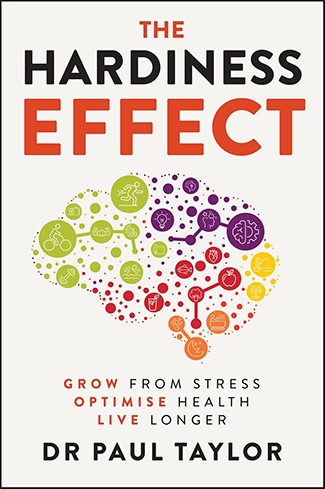
Dr. Paul Taylor, a psychophysiologist and the author of the new book The Hardiness Effect, returns to the show to argue that comfort has become our default mode — and it’s making us mentally and physically sick. To reclaim health and meaning, we must actively choose the path of arete — a life of effort, engagement, and challenge.
Paul first outlines the four traits that define a psychologically hardy person and how we grow by embracing and even relishing discomfort. We then dive into the physiological side of hardiness. We discuss how intentionally seeking stressors can strengthen both body and mind and some of the practices and protocols that lead to optimal health. We end our conversation with what tackling heroic, Herculean labors looks like today.
Resources Related to the Podcast
- Paul’s previous appearance on the AoM podcast: Episode #941 — How to Avoid Death by Comfort
- AoM Podcast #1,087: Why You Need the Good Stress of Socializing
- AoM Podcast #793: The New Science of Metabolism and Weight Loss with Herman Pontzer
- The Choice of Hercules
- AoM podcast on the benefits of sunlight
- “Don’t Die: Eat More Small Fish” by Michael Easter
- AoM Article: Nature’s Prescription — The 20-5-3 Rule for Spending Time Outdoors
- Norwegian 4X4 HIIT Protocol
- AoM article on Zone 2 Cardio
- Omega-3 testing
Connect With Paul Taylor
Listen to the Podcast! (And don’t forget to leave us a review!)




Listen to the episode on a separate page.
Subscribe to the podcast in the media player of your choice.
Transcript
Brett McKay:
Brett McKay here and welcome to another edition of the Art of Manliness podcast. In a story from ancient Greek philosophy, Hercules faces a choice between two paths, one, promising pleasure and ease, the other hardship and struggle, but also growth and greatness. According to today’s guest, this ancient parable is more relevant than ever. Dr. Paul Taylor, a psychophysiologist and author of the new book, The Hardiness Effect, returns to the show to argue that comfort has become our default mode. It’s making us mentally and physically sick. To reclaim health and meaning, we must actively choose the path of arete a life of effort, engagement, and challenge.
Paul first outlines the four traits that define a psychologically hearty person and how we grow by embracing and even relishing discomfort. We then dive into the physiological side of hardiness. We discuss how intentionally seeking stressors can strengthen both body and mind and some of the practices and protocols that lead to optimal health. We enter conversation with what tackling heroic Herculean Labors looks like today. After the show is over, check out our show notes at aom.is/hardiness. All right, Paul Taylor, welcome back to the show.
Paul Taylor:
Thanks for having me, Brett. It’s such an honor to be a returning guest on your bloody awesome show.
Brett McKay:
Well, we had you on a few years ago to talk about your book, Death by Comfort. You got a new book out called The Hardiness Effect, and I love that word, hardiness hardy. People need to use that more. And we’re going to talk about what that is exactly. But I want to talk about how you opened up this book and how it frames what you talk about in the book. You start off The Hardiness Effect with one of my favorite myths from antiquity. It’s the choice of Hercules. For those who aren’t familiar with that myth, can you walk us through it and then explain why did you use this myth as the framework for your book?
Paul Taylor:
Yeah, look, it’s one of my favorite stories as well, Brett, and the myth goes back to Socrates who told the story of a young Hercules and in the Greek version he’s Heracles, but we’ll just go with Hercules. So he was the son of the God, Zeus, and he found himself standing at a literal and a moral crossroads, and two goddesses appeared in front of him. One was Kakia who said her name was happiness, but it was actually vice and the other was Arete, which means virtue. Now, Kakia was beautiful and seductive, and she promised Hercules an easy life, one of luxury, one of comfort and pleasure. Without effort, everything he could possibly want would be handed to him. And then on the other hand, on the other road was Arete. She was pretty plain in appearance, but she had a bit of a natural beauty.
And she told him the truth that her path would be hard. It would demand discipline, courage, and effort, but it was the only one that led to true fulfillment. So Hercules, as we probably know, he chose the Arete path and that choice actually defined him. It leads to the famous 12 labors of Hercules. These were impossible challenges that he had to undertake, that forged his character and ultimately led to Zeus deifying and making him a God because he was impressed with this character. Now, this story, it’s not just mythological, it’s also psychological as well. And it actually inspired Zeno who I know you know Brett was the founder of Stoicism. And today, this represents the choice that we all have between a life of comfort and a life of challenge. And I used it to frame the hardiness effect because I believe that we’re living through our own version of that myth right now, only Kakia has had a makeover. She no longer tempts us with this debauchery, but seduces us with a life of comfort and convenience, the life of, we think about it’s climate controlled homes, processed foods that are engineered to hijack our dopamine systems. We have endless digital entertainment that gives us an illusion of connection, but ultimately delivers loneliness. And this modern life of ease, I think leads to a life of disease. Now it’s really comfort creep on a civilization scale. We’ve now medicalized normal emotional experiences. We’ve created effort for ease and created a society with a default discomfort. And the outcome really is fragility. It’s physical, it’s mental, it’s emotional fragility. And we see that in rates of obesity, chronic disease and mental illness reflecting it. So really the story of Hercules at the crossroads became my metaphor for modern human condition. And every day we choose, do we walk Kakia’s path of ease and decay or Arete’s path of discipline, growth and meaning. And really the hardiness effect is an instructional manual for choosing arete. In the modern world, it’s about building the psychological and physiological capacity to take the hard path because that is the one that leads to the good life.
Brett McKay:
At the beginning of the book, you talk about the consequences of our modern day Kakia path that a lot of westerners are living. And you get into the statistics, obesity, diabetes, mental illness has just been creeping up for the past several decades. And you argue that it’s because just our way of life where we can be sedentary and be isolated and not do hard things is what’s contributing to that?
Paul Taylor:
Absolutely, a hundred percent. If you take an animal out of its natural environment, that animal does not do well. And this is what’s happened to us is that we have slowly over time moved into an environment that is not natural for us. We are not meant to be creatures of comfort. It is actually through challenge, physical and mental challenge that we actually become really human. And when we don’t have those challenges, we actually decay. The body just reacts to the environment.
Brett McKay:
Yeah, I mean, we had Herman Posner on the podcast. He studies metabolism.
Paul Taylor:
Yes.
Brett McKay:
Yeah. One of the big takeaways I got from him is that the human body has to move. You have to move for overall health, and if you don’t, you just get fat. What’s interesting, other primates like gorillas and chimpanzees, they can sit around and eat leaves all day and they don’t get fat because they don’t have to move. But for some reason, humans, you have to move in order to stay metabolically healthy. And our environment, our lives no longer compel us to do that anymore.
Paul Taylor:
That’s right. And actually when you look, our biology is so wired from movement. Hernan is absolutely correct. And what we know is that when we don’t move, not only does it affect us physically, but it also affects us mentally and psychologically. Every time you exercise, I like to tell people there is a neuro symphony going on in your brain. There is this orchestra of neurotransmitters. Everybody knows about endorphins, but when you exercise, we also release dopamine. We release serotonin, release noradrenaline, release endocannabinoids, and cafallons in our brain. And these are all positive neurotransmitters that not only help your brain to function well, but are really important for good mental health. And so I always say to people, if you have a life where you’re not moving very much, and especially if you combine that with eating a crappy diet and not sleeping very well, good luck with your mental health because you are swimming upstream massively. We’re just starving our body of what it actually needs to perform normally, nevermind optimally.
Brett McKay:
So we all face this choice to choose Kakia, but the problem we have today is that it’s not so much a choice. Like Kakia is almost like the default and you have to kind of fight against it. And you have to choose arete intentionally. I mean, maybe you can argue 200 years ago you were kind of forced to choose arete because you had to farm and you had to work hard just to live your life. And kakia was sort of like a luxury. Today it’s the opposite. And you have to intentionally choose arete, and you propose that hardiness is the way to choose the path of arete. And what’s interesting, hardiness, it’s a fun word I think of the hardy boys, kind of these vital young men, you’re full of vigor, but there’s actually a psychological concept. How do researchers define hardiness?
Paul Taylor:
Yeah, look, it’s a bit of a close cousin to resilience and often they’re used interchangeably in the research, but they’re actually not the same. Resilience is more of an outcome. It’s about bouncing back, but it doesn’t tell you how to get there, hardiness actually does. So it was first identified by Dr. Suzanne Kobasa and Dr. Salvato Maddi in the 1970s and really explains why some people thrive under stress while other people crumble. So they did this landmark 12 year study at Illinois Bell and Telephone company, and they were going through a corporate crisis. And they found that over these 12 years, about two thirds of the employees fell apart under pressure, but a third of them didn’t just cope, they actually grew stronger. And they found that these group, they shared three core attitudes, a challenge orientation, a control orientation, and a commitment orientation. So let’s look at each one of those.
Challenge orientation and hardiness is about seeing both change and adversity as opportunities for growth rather than threats. Control is the belief that you control or heavily influence your environment or your destiny. And in psychology we call that an internal locus of control, and it’s also about focusing your energy on what you can control or influence rather than feeling like a victim. And then the last is commitment. This is about being fully engaged in life and living with purpose instead of withdrawing or wandering aimlessly. Now these guys started the research, but other researchers like Paul Bartone, he’s a US Army psychologist and he’s great and he’s a bit of a mentor of mine in this area. He really expanded the research and he found that hardiness actually predicted who passed and who feels basic military training, and then found that hardiness predicted who passed special forces selection course.
And it’s then it’s been shown that hardiness predicts career longevity and high pressure careers such as the military, police and first responders. And so if resilience is about bouncing back, hardiness is about bouncing forward. It’s the process that creates resilience. And the benefits are huge as well as predicting success in high pressure environments, high hardiness scores predict better cardiovascular health, stronger immune systems, lower rates of anxiety and depression. And even kids who are higher in hardiness are much more likely to go to university independent of their socioeconomic status, which is pretty critical. And then in my own PhD research, we ran a six week hardiness intervention and we saw measurable improvements, statistically significant in mental wellbeing, in stress tolerance and hardiness as well as measures of cognitive performance. So we showed that you can learn it, it’s not just a trait you were born with, it’s a set of learnable skills. And I’ve added a fourth C that of connection, which I’m sure we’ll unpack a little bit. But really for me, choosing hardiness, like you said, is today’s version of choosing the path of rite. It’s committing to growth through discomfort both psychological and physiological. And the payoff is a life that’s not just longer but also fuller and more engaged and more meaningful.
Brett McKay:
So what you’ve done in the book, you’ve broken down hardiness to two parts. There’s psychological and physiological hardiness, and it seems like those three C’s you laid out the challenge control commitment. And then the fourth one that you’ve added connection. We’ll talk about that here. That makes up psychological hardiness. Correct?
Paul Taylor:
Correct. That’s right, yes.
Brett McKay:
Well, let’s dig deeper into these different components, these four C’s of psychological hardiness you mentioned. The first one is challenge. This is about seeing adversity as a challenge instead of a stressor. How can seeing stress and adversity in your life as a challenge as opposed to something just to upset you, how does that change your psychology and even your physiology?
Paul Taylor:
Yeah, look, it has a massive effect. It changes how we think, how we act, and even how ourselves behave. So at its core challenge orientation, this is about how we appraise stress. It’s the view we take of it. So when something tough happens, whether it’s you’re in a big project given an argument or some sort of a setback, your brain decides almost instantly is this a threat or is this a challenge? And that split second perception actually dictates both your psychological leaning and your physiological response. So if you view it as a threat, you go into avoidance mode. So you’re motivated to leave, to procrastinate, to run away. It’s the flight part of fight or flight. Whereas if you see as a challenge, it’s what we call approach orientation. In psychology, you actually lean in and then physiologically it’s very, very different. When you see as a threat, your body constricts your blood vessels, cortisol rises, your cognitive flexibility drops, and the chemicals that the major stress hormone is cortisol, and I’ll come back to that in a second.
But when you see something as a challenge, your cardiovascular system actually responds like it does during exercise, your blood flows freely, oxygen delivery improves performance and cognition actually rise. And this is the fight part of the fight or flight. Now, the chemicals involved in your body with a challenge orientation, it is about the hormones, adrenaline and no noradrenaline, which in your side of the ditch, they call it epinephrine and norepinephrine. Now the half-life of those chemicals is about a minute, and that means with about four half-lifes, that chemical’s out of your body. So within five minutes, your body is back to homeostasis. So same me and you both have the same situation. You view it as a challenge, your body is back to homeostasis within five minutes. With me, because I’ve released cortisol, the half-life of cortisol is well over an R. So that means that ours later, even when that challenge or threat is gone, my body is still in a stress field. I still have cortisol going through my bloodstream, attacking my organs and my brain. Now this isn’t just theory. There’s research by numerous psychologists that show that our mindset towards stress literally changes our biology. And people with a challenge orientation, they recover faster from stress, they got lower inflammatory markers and they performed better under pressure. And I recently interviewed professor Jeremy Jameson. He ran a series of experiments with college students before an exam, I think, do you call it the GRE Brett?
Brett McKay:
Yeah. To get into grad school.
Paul Taylor:
Yeah, that’s it. The one to get into grad school. And he told half of them that anxiety was a normal thing and it actually prepared their body to action and could translate into better performance. And the other half the control group, he told no such thing. And then they all did a mock exam. And the people who he primed that anxiety, this challenge orientation, they did better in the mock exam, but they also then did better in the real thing as well. So your perception influences your performance as well. And the stoics understood this. 2000 years ago, Seneca said “A gem cannot be polished without friction, nor a man perfected without trials.” And the idea is that the friction is the forge. Hardiness is about leaning into that friction deliberately. That’s the key thing.
Brett McKay:
Yeah, I think that’s a powerful concept to understand if you see your stress in your life, not as a threat, but as a challenge, there’s so many benefits to that. Any tips that you found? Research backed tips on how you can strengthen your challenge muscle? I mean, I think one you talked about is this idea of acceptance and reprisal.
Paul Taylor:
Yeah, yeah, yeah. So this is really key. It goes back to even the historics who talked about life being hard, the Buddha, the first noble truth of Buddhism is life is suffering. Well, the word is actually dca, which means hard to do. So it’s first of all accepting that life is going to be hard. And then it’s about accepting that you are going to come through challenges in your life. And I tell this to my kids, I say to my kids, life is amazing, but it is also going to be hard at times. And it’s about how you react to that. So first of all, it’s just accepting that life is going to be hard, that occasionally you will get shit sandwiches from the universe and that acceptance puts you into a state where you can then reappraise. This. Reappraisal is training your brain to interpret stress as fuel rather than poison.
I call it stress alchemy. When you feel that surge, the heart rate rising, your tension, instead of saying to yourself, I’m anxious, say I’m energized. That’s the key thing. And this is the psychological framing, and it’s basically the Stoics talked about life being a contest. So it’s about getting yourself up for the contest of life and seeing these things as challenges to actually test and develop you. So that’s really key. And that reappraisal of viewing stuff as a challenge rather than a threat. You can do it not just in the moment when you’re dealing with stress, but also you can look back on it and actually taking time for your listeners to think of times in your life that were really hard or stressful. And then looking back now, how did that benefit you? What was the silver lining that came? So you can do this arete appraisal two ways. One is viewing things as challenges, but then secondly, looking back on the hard stuff and going, Hey, what did I learn from that? How did I actually grow from that? And that’s really key.
Brett McKay:
Alright, let’s talk about that second C, which is control. It’s about having an internal locus of control. What can the stoics and Admiral James Stockdale teach about developing an internal locus of control?
Paul Taylor:
I love that. So I have a copy of Epictetus’s Enchiridion, which roughly translates as a manual for life. And the very first line of this is of things, some are up to us and others are not. This is really about the stoic dichotomy of control and it’s one of the most powerful psychological tools ever developed. Marcus Aurelius, he put it beautifully, you have power over your mind, not outside events. Realize this and you will find strength. And this is really what’s at the heart of the control component. When you’re in control orientation, you don’t waste mental energy on things you can’t change, whether it’s the weather, other people’s opinions, the economy or those sorts of things. You focus on what you can do and what you can influence. And that actually reduces our stress. It takes us out of victim mode and gives us some agency, right?
So the stoic said that we must focus on that which we can control and refuse to invest our energy in that which we can’t control. And a lot of people get into trouble psychologically when they’re investing their energy in stuff they can’t control. They’re in their own heads wishing their past to be different, wishing other people to be different, wishing the universe to orientate around them. These are all things that we can’t control. Now, Stockdale, I love that you mentioned Stockdale. He’s a bit of a personal hero of mine and he is a modern day stoic and he really embodies this control orientation. Now Stockdale, he was shot down over North Vietnam and he spent seven and a half years in the infamous Hanoi Hilton prison camp. And four of those years he was in solitary confinement. He was tortured on 15 separate occasions. But what kept him going was stoicism is specifically Epictetus’s Enchiridion that he had brought that to war with him when he got shot down.
He talks about this in a number of his books as he ejected out of his aircraft and he was coming down to land, he could see the Vietcong coming in to capture him. And he said to himself, I’m now leaving my world, the world of technology and I’m entering into the world of Epictetus. And he knew that he couldn’t control his captors or his circumstances or the torture, but he could control how he responded to it. So Stockdale famously, he took control of his mind. He maintained leadership over the other prisoners because he was the senior officer in there and created meaning within chaos. And it was that focusing on what he can control that was really central to his success in there and him helping his other fellow prisoners to get through. Now, studies in both military and organizational settings show that people who have a strong internal locus of control, they experience less anxiety, they perform better under pressure and they recover faster from trauma. And so it’s proactive rather than reactive. And you can actually train yourself into this way as well. You can develop your control muscle if you like.
Brett McKay:
Yeah. How do you do that?
Paul Taylor:
Well, it’s basically changing your narrative. So say you got pissed off about something, a lot of people will go, they made me angry or this ruined my day, or I had no choice in this. All of those things are handing away control. It’s actually about self-awareness is really the first thing. And reframing that in your head from they made me angry too. I chose to feel angry. I decided to let that affect me. Now that can be a bit uncomfortable at first and a bit awkward, but it really is incredibly I empowering because what you’re actually training yourself to do is to realize that you have a choice about how you react to things. That’s really key. And I think that another second practice is the stoic idea of visualizing your day. Now this might seem a bit pessimistic, but it’s actually really helpful. It’s basically the stoic excuse to Marcus really famously would do this.
He would think about all the things that could possibly go wrong, the bad people he would meet and what he would actually do for that. So it’s about mental rehearsal so that when the bad stuff happens, you’re actually ready to do that. And then it’s about doing little small daily acts is about making your bed properly, finishing your workout even when you don’t want to. Choosing the healthy thing rather than the unhealthy thing and then reflecting on it and going, Hey, I made a conscious choice. There are around control. Every little action just builds that muscle bit by bit.
Brett McKay:
Alright, so the third C is commitment. What is it about commitment that makes us more hearty?
Paul Taylor:
Yeah, so it’s interesting, there’s a number of different elements to commitment, but they all interact with each other. So it’s really about being fully engaged in life. And I am increasingly concerned about modern society, and I know you are Brett as well. I listened to your podcast that there’s an increasing amount of people who are spending an increasing amount of their spare time within the confines of four walls with their heads buried in a bloody screen, either scrolling on social media or watching crappy tv. These people are what I call passive consumers of life. And it’s the polar opposite to high hardiness commitment, high hardy, committed people are fully engaged in life, whether it’s their work, their relationships, their health or their learning. They’re people. You know these people because they’re curious, they bring positive energy, they derive their meaning from participation, not from results.
And I really think that this commitment, it’s a bit of an antidote to apathy. So in our culture it’s really easy to live that passive life of scrolling, multitasking, of numbing yourself with drugs and alcohol. But when you’re committed, you’re really present. And the stoics really talked about this as well, and Seneca said, it’s not that we have a short time to live, but that we waste a lot of it. And this is about whether or not you are fully engaged. Now, linked to that in commitment to orientation is a sense of meaning and purpose. And in Viktor Frankl’s book, Man’s Search for Meaning, which I read as a 17-year-old that had a pretty profound effect on my life. And he showed that those who survived the concentration camps, they weren’t the strongest or the smartest, but they were the people who were committed to a purpose that was bigger than themselves. And the hardiness research actually echoes that. Salvador Maddie found that people who were high in commitment, they kept deeply engaged in their work and their relationships under stress. They handle stress far better than people with low commitment and they actually experience a lot less burnout.
Brett McKay:
So what are some things we can do to develop our commitment muscle?
Paul Taylor:
So one is about really clarifying your values. And I think part of the problem in modern society is the decline of religion. Now, I’m not religious at all, I’m more of a spiritual person, but I think what religion does was it gave people a sense of shared values and meaning. And when that’s missing, if you don’t deliberately find it, people can end up in an existential vacuum. So it’s really about getting clear on your values, the stuff that is meaningful to you, and then it’s about creating systems around because motivation that will get you started. So this gets into another part of commitment to orientation, which is about being committed to your health. It’s not just about having goals, but it’s about having processes that will actually help you to get to the person that you want to be and ideally linking them to your values.
And then I like to get people to do what I call a tombstone statement, which is what would you like to be written on your tombstone that would sum up your contribution to society or your little corner of the universe? It’s kind of a morbid thing, thinking of how would I be thought of when I’m dead? But that is the thing that uncovers that deeper sense of meaning and purpose. So getting clear on your values and on your purpose in life and then trying to live intentionally using those values as a compass. These are the things that really help to drive that commitment orientation.
Brett McKay:
Alright, so you added a fourth C to these three Cs of psychological hardiness. That’s connection. What is it about connecting with others that makes us more psychologically hearty?
Paul Taylor:
Well, look, Brett, the human brain is essentially a social organ. And we need that social connection. We know that when somebody is lonely, it is as bad for their health as smoking 20 cigarettes a day. It takes 10 to 12 years off your life and it’s hugely, hugely important. We talked about Stockdale in the Hanoi Hilton. The thing that got these guys through when they were put in solitary confinement was they created this thing called the tap code where they could tap out the letters of the alphabet on the walls and the pipes and they created all this shorthand and the tap code was the glue that held these guys together. When you connect with somebody else, you release oxytocin and vasopressin in your brains. Now they’re the hormones of love, trust, and social bonding, but they are also the most potent anti-stress chemicals that human beings produce.
And decades of research on military veterans as well as people who’ve been through trauma shows that those who are socially connected, who have people that they can lean into, they suffer much less PTSD and suicide than people who don’t have those social connections. And it’s because we are evolved to survive and thrive in tribes. And social support is one of the most powerful buffers against stress that we have. I mean Paul Barone showed this on PTSD and also there’s a researcher, she showed the people with strong social relationships, they’ve got a 50% lower risk of premature death than people who don’t have those relationships. So connection for me is hugely, hugely important. And that’s part of today’s massive problem of Kaia is that we are massively digitally connected, more connected than we’ve ever been, but we are really disconnected when it comes from to face to face perspective.
Brett McKay:
Yeah, we had Derek Thompson on the podcast a while back ago. He wrote an article for The Atlantic about how it’s basically there’s no loneliness epidemic because people aren’t really feeling lonely because we have all of this technology that can basically, we don’t feel like we’re lonely and so we don’t feel like we have the need to reach out to people, but we’re still seeing the ill effects of not actually connecting with other people.
Paul Taylor:
When you do face to face interactions, it is very, very different to online interactions. And he makes a good point that we don’t actually notice it because we still think that we are connected. But there is nothing that replaces that face-to-face interaction. And other research has shown that it is about catching up with people in person. It’s about having good friends that you will see at least once a month. That is one of the real key things here.
Brett McKay:
So it takes intention. You have to be intentional about this because everyone’s schedule’s crazy. You’re not just going to run into your friends like maybe you would’ve done a century ago. You have to plan for it, you have to choose it.
Paul Taylor:
You absolutely do. You’re a hundred percent right Brett. And it’s not about waiting for other people to organize something, it’s about being the connector in your little corner of the universe. Taking that on board I think is really key.
Brett McKay:
Alright, so that’s psychological hardiness. So there’s the four Cs challenge orientation, have an internal locus of control commitments to being engaged, have a higher purpose that you’re going for and then connecting with others that can give you psychological hardiness. Let’s talk about physiological hardiness. And we had you on last time talking about your book Death by Comfort. And one of the things we talked about in that podcast was how hormesis can be the antidote to the damage that all this comfort is causing to us physiologically. For those who aren’t familiar with hormesis, what is it?
Paul Taylor:
So hormesis is basically it’s summed up by the words of Frederick Nietzsche, that which does not kill us, and I’m sure all your listeners can finish the sentence makes us stronger. And this goes back, it actually goes back to biology like core biology. Edward Calabresi first noticed in his PhD research he was giving pesticides to plants to try to kill him and seeing what was the smallest dose that would actually kill them. And he found that at small doses, the plants actually flourished when they were given small doses of poison. And that led him to a whole heap of research and other researchers that they enjoined in. That shows that when we are exposed to small intermittent doses of stress, we actually get stronger, more robust at a cellular level. So when your body is presented with stressors, something called the cell danger response kicks off.
And that is the cells actually responding to stress by upregulating protective pathways. I describe them in the book, there’s things like NRF two and HIF one, but these drive our antioxidant defenses, they make our mitochondria stronger and they drive cellular cleanup processes like autophagy. And it’s basically your sales saying, Hey, we’re under a bit of pressure here. We need to get fitter, we need to train for this eventuality. And so for me, physiological hardiness and psychological hardiness or physiological hormesis and psychological hardiness, they’re like two sides to the same coin. The hardy mind reframes stress as a challenge and the body uses stress as medicine. So we actually, because of exposure to small amounts of stressors, and think of the obvious ones like exercise, cold exposure, heat exposure, all three of these activate these stress response pathways and not just in humans, in fruit flies, in worms, in cats, in dogs, in rodents, all primates all respond to those stressors and fasting as well with an upregulation of these stress response genes that in humans switch on at least 300 protective mechanisms.
So the goal here is not to avoid stress, but it’s to dose it deliberately. So there’s a hermetic curve. If you don’t do anything, it’s bad for you. You start to do some of these stressors, it’s good for you, a bit more is better, but there is an optimal point where it starts to become too much after that. And so this is about dosing it deliberately and intermittently. And the ancient stoics, they did it with cold baths and fasting, and this is about stress inoculation, it’s about nature’s physiological hardiness because of exposure to stress and appropriate recovery. That’s the key thing. And it actually keeps us biologically young and adaptable.
Brett McKay:
So in the book, in the section about physiological hardiness, physiological robustness, you provide different forms of hormetic stress, stress that can be medicine for individuals. One of the most potent ones is exercise. And in that section you recommend that people focus on two markers of fitness, VO2 max and strength. Why those two?
Paul Taylor:
Yeah, look, they are really critical. Just before I dive into that, two legendary exercise physiologists released a paper, I think it was 2013, exercise prevents and or treats 26 common chronic diseases. That is just crazy. You imagine if the pharmaceutical industry produced a pill that would simultaneously reduce your risk of 26 chronic chronic diseases and that the reason is that it releases all of these mykines, which are signaling molecules. But to answer your question now, so your VO2 max, that’s your maximum oxygen uptake, how much oxygen you can take in and use, and it’s the gold standard measure of cardio respiratory fitness. And lots of your listeners will have heard of it. And if they have an apple watcher or Garmin or whoop band or an oil ring, it’ll actually estimate their VO2 max and then you can look up tables online to see where you are.
What we now know is that your VO2 max is the single biggest predictor of how long you’re going to live way above everything else. So there was a massive 2018 study I talk about in my book from the Cleveland Clinic that followed over 120,000 people who’d all done stress testing on their heart and had their VO2 max measured and they followed these guys, they were in their fifties or their sixties at the start and they followed them for 15 years and a bunch died and a bunch obviously didn’t. And then they went back and looked at the data 15 years ago around their VO2 max and they found that VO2 max was associated with dramatically lower all cause mortality and there was no upper limit that meant that the fitter people got the longer they actually lived. And it was way more predictive of future death and having heart disease or diabetes or high blood pressure, any of those things.
So it is about training for your VO2 max. So how do you do it? Well, first of all is a bit of a base of zone two training, and your listeners may have heard of this. It’s 60 to 70% of your max heart rate. Basically you can talk but you can’t sing. Now that’s a base, but you can’t just do zone two and hope to improve your VO2 max. That will really help your mitochondria. The best way to build your VO2 max is the Norwegian four by four protocol. So this is basically you do four minutes of all art exercise, you can pick any piece of equipment, a rower, a step or a treadmill, whatever, or you can just be out running and you go as hard as you can for four minutes to the point that at the end of those four minutes, your heart rate should be 95% of your maximum. That is like I’m almost dying. And then you recover for three minutes. You just sort of turn your legs over for three minutes and you do that four times. That’s the four by four protocol. That is the single best way to re your VO2 max. And you only need to do that once a month. That’s key. And then I think, did you ask about the second one, which was about strength
Brett McKay:
Training? Yeah, strength, yeah, strength training.
Paul Taylor:
Yeah. Look, I know you’re a big fan of strength training and the second biggest predictive of how long you’re going to live is your muscle strength. And it appears in the research to be muscle strength, not your muscle mass. Stronger people live longer and they stay independent for longer. And it’s because our muscles aren’t just for movement. I mentioned it earlier, they are endocrine organs. Your muscle is an endocrine organ that secretes these molecules called myokines that reduce our inflammation, improve our brain health, and improve the health of all of our different organs. So really it is about using that muscle. And we know that becoming stronger is protective against sarcopenia. That’s that loss of muscle and bone as you age. And that if you become sarcopenic in old age, it actually dramatically increases your risk of pretty much every chronic disease. So I’m a big fan that everybody who’s listening to this podcast should be lifting heavy.
I don’t care what sex they are, what age they are. In fact, the older they are, the more important it is to lift heavy. And a good program if people don’t do it would be just full body strength training sessions. Ideally three of those a week focusing on compound movements, the big lifts that use multi joints, things like squats, deadlifts, presses, pull-ups. Plus also I think it’s really important to add in single leg work like Bulgarian split squats or lunges because that stability is really, really important, especially as we age and especially if you get over 50 as well as single leg work, do some balanced stuff as well because what we now know is if you’re in your sixties and you fall over and break a hip or a pelvis, you got a 50% chance of being dead within the next five years. So the takeaway here is simple. You need to train your body to be hard to kill. Cardio makes you harder to kill from the inside out and strength makes you harder to kill from the outside in and together is this physical foundation of hardiness. I think we need to do both.
Brett McKay:
Awesome. So yeah, strength train three times a week and then get in some zone two cardio and then a HIIT workout.
Paul Taylor:
Get comfortable with being uncomfortable with the Norwegian four by four and you can just look it up. It’s not pleasant, but it’s useful.
Brett McKay:
I do it once a week. Yeah. So another hormetic stress you talk about is light. How is light a stressor?
Paul Taylor:
So light is both, as I said, it’s a hermetic stressor so you don’t get any of it and it’s really bad for you. You get some, it’s good, you get more, it’s better. But there is an optimal point and everybody knows with sunlight that you could get too much sun and that can cause skin cancer. But what most people don’t realize is that if you have low vitamin D or even suboptimal vitamin D, which according to different agencies, between 70 and 80% of us globally have suboptimal vitamin D, if you have suboptimal vitamin D, it increases your risk of pretty much every cancer other than skin cancer. Now, if I take a step back and talk about light in general, we now know that light is a signal to our body and it triggers adaptation. So morning sunlight sets your shahinian rhythm, it boosts your serotonin, it anchors your sleep wake cycle and without it your hormones drift, your sleep quality tanks and even your metabolism suffers.
So as I said, low vitamin D levels, they’re not just linked to increased risk of cancer, there is a significant increased risk of cardiovascular disease, a massive increased risk of depression. And actually they’re finding increasing vitamin D acts like an antidepressant. People with low vitamin D have immune dysfunction as well. So I’m all about outcomes. So it’s about getting your blood tested and you want your level to be, if you’re in the states, 40 to 60 nanograms per deciliter, that’s what you use. Over here we use nanomoles per liter. So it’s between a hundred and 150 MLEs per liter, or if you live in the states, 40 to 60 nanograms per deciliter. Now the other thing is you’ve got to look at your skin tone. If your skin is darker or you live further from the equator, you’re going to need to get more sun exposure than people with light skin or who live closer to the equator.
And then when we get to red and near infrared light, that’s when things get really spooky. I mean, Einstein talked about quantum physics as spooky action at a distance and we now know that light has quantum effects on our cells. It’s just ridiculous. But rather than do a deep dive into that, I want to talk about how we use this therapeutically. So red light and near infrared, their wavelengths are between 620 and about 1,050 or more. So red light, which is that sort of 620 to 700 ish, that has a massive effect on your skin. It’s great for healing, it’s great for inflammation, it’s great for eczema and even childhood acne and even in adults, it has really good effects on our skin. It’s good for wound healing, it’s good for burns. They now treating burns victims with red lights straight away and then near infrared lights, which has a slightly longer wave of length, kind of 820 to 1,015 nanometers that actually penetrates through your skin and actually interacts with your mitochondria and triggers the activation of an enzyme called cytochrome sea oxidase.
That’s really important for the electron transport chain, and I don’t want to get too geeky in the physiology, but basically near infrared light stimulates your mitochondria to produce more a TP, the cellular energy, and that’s the fuel for everything in your body. And we know that having good efficient mitochondria protects you against a whole he of physical diseases. So really this is about driving this cellular agents of energy, your mitochondria through that near infrared light. And then as I said, the red light’s good for your skin, but also sunlight is also therapy as well. And then the darkness is really, really important as well for those circadian rhythms. When you change your sleep wake cycle, basically you mess with your circadian rhythms and you mess with your biology. Most people don’t realize, Brett, that your hormones run off circadian rhythms and lots of your cells do too. So when you mess with your sleep cycles, you’re actually messing with your biology.
Brett McKay:
How do you get red light near infrared light?
Paul Taylor:
Yeah, so you can get panels and masks and things like that. So they’re all available commercially and there’s a range of expense based on the size of them and the par and all of that sort of stuff. I get mine direct from China from a factor, it’s called red L led and it’s a lot cheaper and they will make a lot of the ones that American brands put their brand on and doubled the price from it. But I have a red and near infrared light panel and I used it. I had open heart surgery at the start of this year. I found I was born with a dodgy aortic valve and I think that red light and near infrared massively helped my recovery.
Brett McKay:
So another stressor you recommend is nature. Typically we think of nature’s, oh, it’s relaxing to be out in nature. How is nature a stressor?
Paul Taylor:
Well, it’s this balance of stress and recovery that’s really key and nature definitely falls up more on the recovery side. Now there are obviously there’s a bunch of challenges out in nature, temperature, variation, terrain, microbes, all of these things that can stimulate adaptation and they strengthen our immune and our nervous system. So we actually know that when you spend time in nature, if you go walk through the forest, you actually pick up some of the microbiome from the forest, even walking beside the sea. You’ll pick up some of the microbiome in the sea and it actually is good for us. There’s stimulation of it, but then spending time in nature can be hugely relaxing as well and can give us profound recovery. The Japanese, they call it shin Yoku or forest bathing as some people may have found. And when I was researching the book, I couldn’t believe how many research studies, there were studies around forest bathing and study after studies showing that spanning even 20 minutes in nature, lowers your cortisol, lowers your blood pressure, lowers your heart rate, and actually improves immune cell activity.
And then we have the microbiome connection that I talked about. So when you or your kids, they play in the dirt or the garden or you walk barefoot, you’re actually exposed to the microbes in the soil and they interact with the microbes in your skin and even in your gut. And that helps us to regulate inflammation and immune function. So we know that kids who live on farms, adults who live on farms have got much more diverse microbiomes than people who live in cities. This is linked to something called the hygiene hypothesis, that basically our obsession with cleaning and disinfecting everything has actually weakened our immune systems and increased rates of autoimmune disorders and allergies. And an interesting little tidbit for your listeners, Brett, I live in Melbourne in Australia that has the highest rate of allergies anywhere in the world. And you know what they’ve linked it to.
Melbourne also has the highest rate of cesarean section birth anywhere in the world. And what we now know is that being born cesarean section completely changes the immune system, mostly through the gut microbiome. Having a natural birth actually triggers the activation of the immune system. So that time in nature is hugely important. And then there’s this whole idea of grounding or earthing, which I used to think was woo woo. But again, looking into the research, there’s actually a lot of physics behind it that basically when your feet or your body is in contact with the earth’s surfaces, the electrons on the earth, they have biological effects. Now the research is pretty early, but it’s very, very interesting. And there is evidence increasing, evidence of improved sleep, reduced inflammation from grounding our earthing and probably it’s due to changes in our autonomic nervous system and stress as well. So just getting out, spending some time walking, getting your feet, your bare feet on the surfaces of the earth, grass, sand, rock, whatever, actually reconnects us to the world and resets our electric charge. It’s pretty bonkers, but it is real.
Brett McKay:
And one prescription you give people to get more time outdoors is following the nature pyramid. We’ve written about this on the website, it’s really cool. So it’s the 20-5-3 rule. So you want to get 20 minutes in green space three times a week, five hours in a semi wild environment once a month and then three days completely off grid annually. So that’s like a camp out or something. And that’ll give you enough nature that you need for overall health and wellbeing.
Paul Taylor:
Yeah, I love that. I love the stuff that’s just simple that people can go, yeah, you know what, I can do that. And I tell you what, if you do that 20-5-3 prescription, you will notice a significant effect.
Brett McKay:
Going back to that balance between stress and recovery, you talk in the book about nutrition and you focus on a few things that are essential for health and strength. You talk about avoiding ultra processed foods, which is something we discussed the last time you’re on the show. You talk about protein, how essential protein is people should aim to get at least 0.7 grams per pound of body weight. It’s often better to get more, get a gram per pound of body weight. And then you talk about the importance of omega fatty acids. What are omega threes and why are they so important for hearty health?
Paul Taylor:
They’re essential and they are structural fats for your brain and they’re also very potent anti-inflammatories for your body. And I really encourage people to get their omega index tested. You can do this at omega quant QAN t.com. I’ve got no association with these guys whatsoever. They just do brilliant testing. So they’ll give you an omega index or an omega score. It’s the amount of omega threes and percentage of those fats in your rare blood cells. And what we now know is that if people with a score of 8%, they live about five years longer than those who score around 5%. Like you show me some one thing in nutrition that can extend lifespan by five years. I don’t think there’s anything other than omega fatty acids. And what we now know is that the Japanese, on average, their omega index is about 8%, Americans is about 5%, and the Japanese live five years longer than the Americans.
So we really need to increase our omega index and we can get there if you eat lots of fish. That’s why the Japanese have it, particularly fatty fish, salmon, sardines, anchovies. But a lot of people will have to be supplemented. If you’re not eating fish three or four times a week or more, you really got to supplement and about two grams of high quality fish oil or if you’re plant-based algal oil, the stuff algae, the stuff that the fish feed on, that is actually a really good way to reach your omega fatty acids as well. And I think as well as minimizing ultra processed foods, they are the two most powerful nutritional interventions you can do.
Brett McKay:
Yeah, something I’ve been doing lately for the past couple months is I’ve started eating anchovies and sardines. As a kid I was like, that’s gross. That’s what grandpas eat. But then Michael Easter, he had an article on a substack about you need to eat more small fish. I was like, okay. So I went to Whole Foods and bought some cans of sardines and anchovies and they’re not bad. They taste like tuna fish, anchovies a little salty, but I try to get two to three of those a week and it’s easy and it’s cheap. It’s not that expensive.
Paul Taylor:
Yeah, that’s right. And I’m a fan of eating anchovies, and I think it’s useful to explain to people why small fish, small fish don’t live as long the big fish, particularly big fish like tuna, you’ll find that they tend to have more heavy metals in them, more mercury, because they eat lots of small fish. So having the small fish like sardines and anchovies is a really good way to do it.
Brett McKay:
So you wrap up the book by revisiting the Myth of Hercules, and you frame your recommendations using Hercules’ mythical 12 labors, and they’re kind of a summary of the principles we discussed. So let’s end there. What are the Herculean labors a modern person should undertake to live a life of arete?
Paul Taylor:
Yeah, look, the first one I think is overarching and it’s actually forging the hardiness mindset. This is that actually choosing to see change and adversity as opportunity for growth just as Hercules did then it’s embrace life’s challenges. And I love this idea that stoics talked about life as a contest. The Olympic games are upon us, and I think we need to view life as a contest and actually get into the contest with passion and view all of these challenges as little tests of your character and wake up every day and go, you know what? I’m ready for the contest. I think that’s really key. Then it’s focus on the stuff that you can control. Don’t invest your energy in the stuff. You can’t get committed to life. Be fully engaged in life. I get people to look at their screen time and if you are spending three Rs or four hours of your life on screens extrapolated over your lifetime, that’s like 10 to 15 years of your life with your head buried in a screen.
So it’s, for me, it’s about choosing to engage fully in life. And then the other say about connection, having meaningful face-to-face interactions with friends. And then the rest of it is really about that physiological hardiness is actually engaging in these deliberate stressors of exercise, of heat, of cold exposure, of nourishing your body when you’re eating, of exposing yourself to beneficial light and then making sure that you recover. But the key for me, Brett, I think the last thing that I’d like to impart to your listeners is that recently scientists have roughly estimated our chances of ever having being born, and they reckon it’s about one in 400 trillion. And if you think about it, all of your ancestors way back to your homo Habilis, homoerectus ancestors, they all had to survive in order for you to be alive. Somebody probably survived the plague in England, one of your ancestors, somebody probably survived just World War I or World War II. But this is the thing is waking up every day and going, I have won the greatest lottery ever. I’ve had a one in 400 trillion chance of being alive. Let’s not waste it and let’s embrace the contest. I think that’s the key thing.
Brett McKay:
Well, Paul this has been a great conversation. Where can people go to learn more about the book and your work?
Paul Taylor:
So the best place to go would be my website, which is paultaylor.biz. You can get the book there. You can also get the book on Amazon and also my podcast, which is the Hardiness podcast. I think if you’re interested in this, there’s going to be a big deep dive on hardiness in that podcast.
Brett McKay:
Fantastic. Well, Paul Taylor, thanks for your time. It’s been a pleasure.
Paul Taylor:
Thank you for having me on again, Brett, and love your work. Absolutely love it.
Brett McKay:
Thank you so much. My guest was Dr. Paul Taylor. He’s the author of the book, The Hardiness Effect. It’s available on amazon.com and bookstores everywhere. You can find more information about his work at his website, paultaylor.biz. Also, check out our show notes at aom.is/hardiness where you’ll find links and resources to delve deeper into this topic.
Well, that wraps up another edition of the AoM podcast. Make sure check out our website at artofmanliness.com. Find our podcast archives and check out our new newsletter. It’s called Dying Breed. You sign up at dyingbreed.net. It’s a great way to support the show directly. As always, thank you for the continued support. Until next time, it is Brett McKay reminding you to not only listen to the podcast, but to put what you’ve heard into action.